
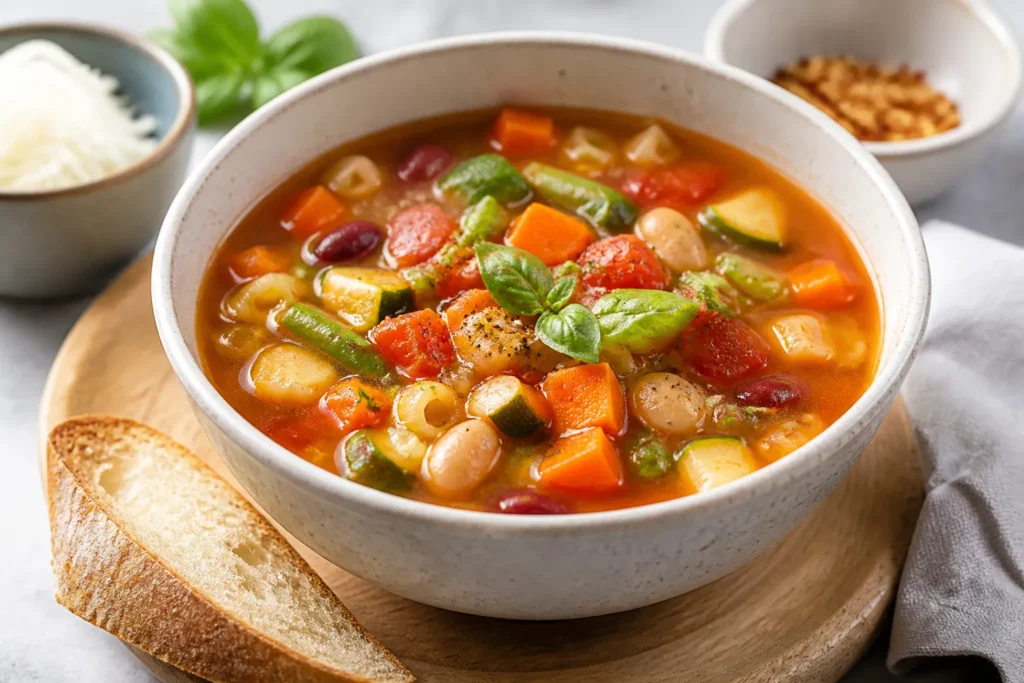
This vegan minestrone is the kind of soup you make once and crave all season. It’s loaded with everyday vegetables, tender beans, and small pasta, all simmered in a rich tomato broth. The flavor is bright, herby, and deeply comforting without feeling heavy.
It’s also flexible, so you can use what you have and still get a great result. Make a big pot on Sunday and you’ve got lunches sorted for days.

Vegan Minestrone Soup Recipe Packed with Vegetables - Cozy, Hearty, and Simple
Materials
- 2 tablespoons extra-virgin olive oil
- 1 medium yellow onion, diced
- 2 medium carrots, diced
- 2 celery stalks, diced
- 3 garlic cloves, minced
- 2 tablespoons tomato paste
- 1 teaspoon dried oregano
- 1 teaspoon dried basil (or 1 tablespoon chopped fresh at the end)
- 1/2 teaspoon dried thyme
- 1 bay leaf
- 1 (14.5-ounce) can diced tomatoes (with juices)
- 6 cups vegetable broth (low-sodium preferred)
- 1 medium zucchini, diced
- 1 cup green beans, trimmed and cut into 1-inch pieces (fresh or frozen)
- 1 (15-ounce) can cannellini beans, drained and rinsed
- 1 (15-ounce) can red kidney beans, drained and rinsed
- 1 cup small pasta (ditalini, small shells, or elbow macaroni)
- 2 cups chopped kale or baby spinach (packed)
- 1–2 teaspoons red wine vinegar or lemon juice, to finish
- Salt and black pepper, to taste
- Optional: red pepper flakes, to taste
- Optional garnish: chopped fresh parsley or basil, and a drizzle of olive oil
Instructions
- Build the base: Warm the olive oil in a large pot over medium heat. Add onion, carrots, and celery with a pinch of salt. Cook 6–8 minutes, stirring, until softened and lightly golden.
- Add aromatics: Stir in garlic, tomato paste, oregano, basil, thyme, and bay leaf.Cook 1–2 minutes until the tomato paste darkens slightly and smells sweet.
- Simmer the broth: Add diced tomatoes and vegetable broth. Bring to a boil, then reduce to a gentle simmer. Cook 10 minutes to meld flavors.
- Add firm vegetables: Stir in zucchini and green beans.Simmer another 8–10 minutes until just tender.
- Beans and pasta: Add cannellini beans, kidney beans, and pasta. Simmer 7–10 minutes, stirring often, until the pasta is al dente. Add a splash of water if the soup gets too thick.
- Finish with greens: Stir in kale or spinach and cook 1–2 minutes until wilted and bright green.Remove the bay leaf.
- Season and brighten: Add red wine vinegar or lemon juice. Taste and season with salt, black pepper, and red pepper flakes if using.
- Serve: Ladle into bowls and garnish with parsley or basil and a small drizzle of olive oil if you like.
Why This Recipe Works
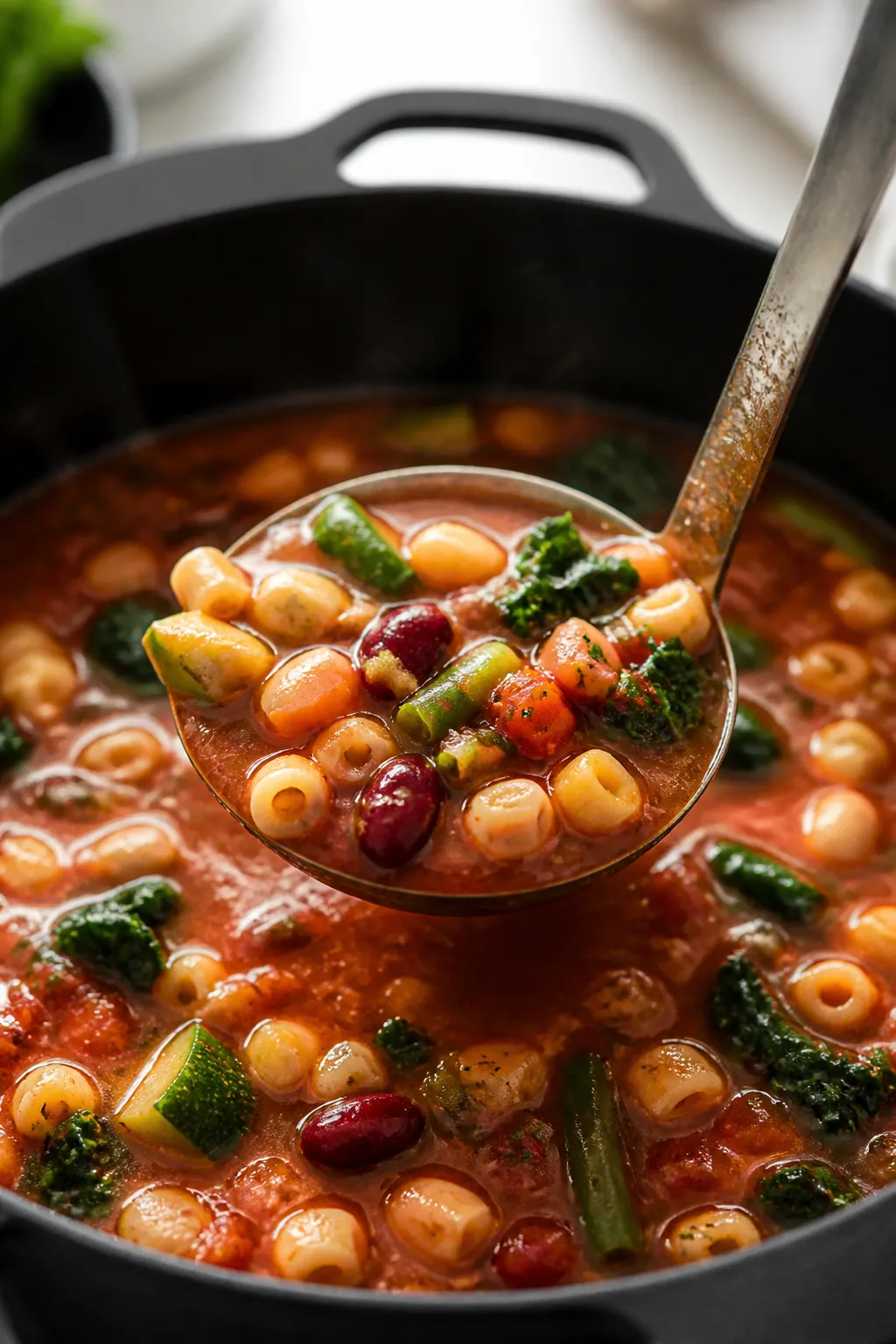
- Layered flavor from simple steps: Sweating onions, carrots, and celery creates a savory base. Tomato paste and herbs add depth, while a splash of vinegar at the end brightens everything.
- Great texture balance: Beans make it hearty, pasta adds chew, and veggies stay vibrant when added in stages so nothing turns mushy.
- Flexible and pantry-friendly: Use canned beans, frozen vegetables, or leftover greens.
It’s easy to adapt to the seasons or your fridge.
- Naturally filling, fully plant-based: Fiber-rich beans and vegetables keep you satisfied without needing dairy or meat.
- Meal-prep friendly: The flavors improve after a day, and the soup reheats well for quick meals all week.
Ingredients
- 2 tablespoons extra-virgin olive oil
- 1 medium yellow onion, diced
- 2 medium carrots, diced
- 2 celery stalks, diced
- 3 garlic cloves, minced
- 2 tablespoons tomato paste
- 1 teaspoon dried oregano
- 1 teaspoon dried basil (or 1 tablespoon chopped fresh at the end)
- 1/2 teaspoon dried thyme
- 1 bay leaf
- 1 (14.5-ounce) can diced tomatoes (with juices)
- 6 cups vegetable broth (low-sodium preferred)
- 1 medium zucchini, diced
- 1 cup green beans, trimmed and cut into 1-inch pieces (fresh or frozen)
- 1 (15-ounce) can cannellini beans, drained and rinsed
- 1 (15-ounce) can red kidney beans, drained and rinsed
- 1 cup small pasta (ditalini, small shells, or elbow macaroni)
- 2 cups chopped kale or baby spinach (packed)
- 1–2 teaspoons red wine vinegar or lemon juice, to finish
- Salt and black pepper, to taste
- Optional: red pepper flakes, to taste
- Optional garnish: chopped fresh parsley or basil, and a drizzle of olive oil
How to Make It
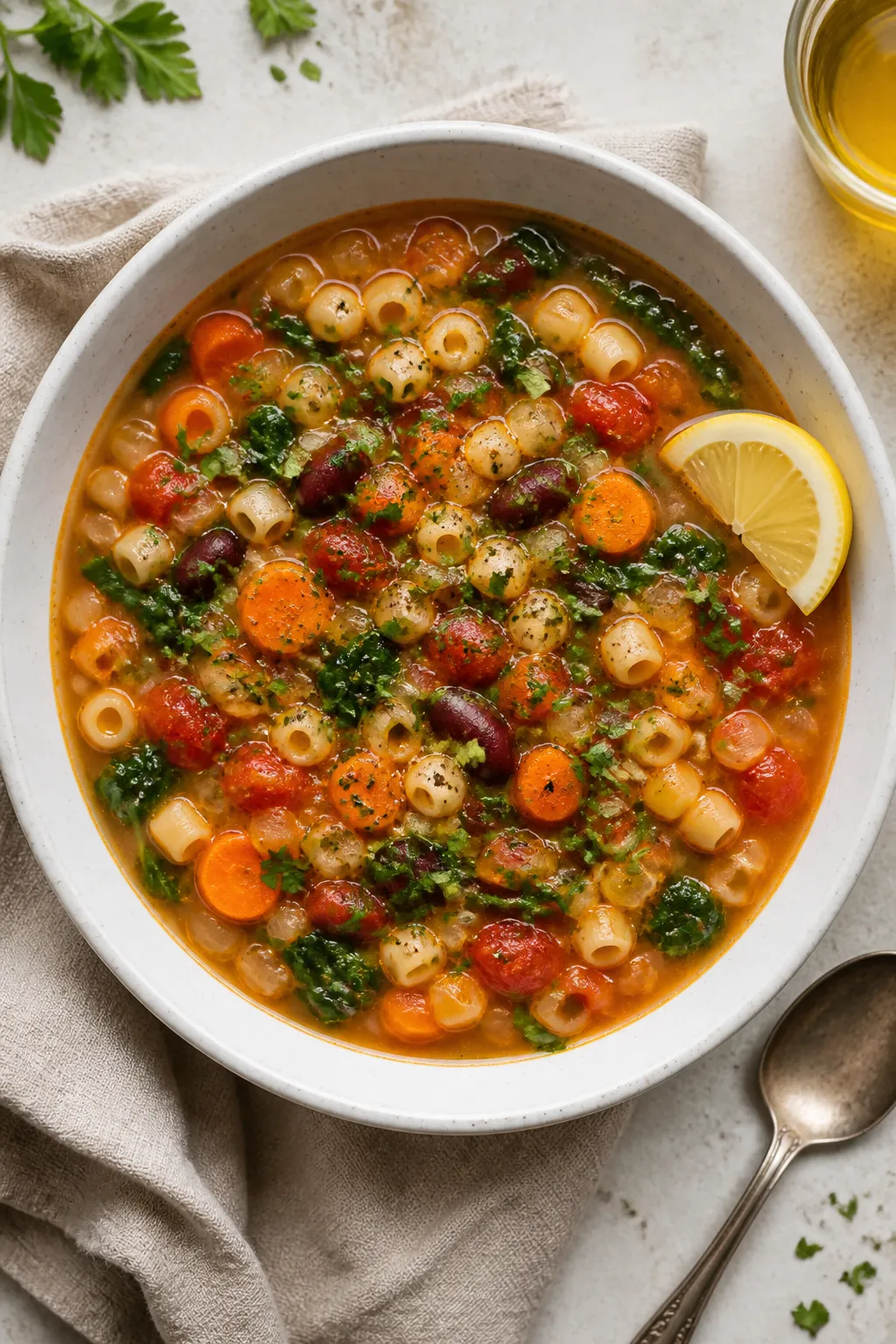
- Build the base: Warm the olive oil in a large pot over medium heat. Add onion, carrots, and celery with a pinch of salt. Cook 6–8 minutes, stirring, until softened and lightly golden.
- Add aromatics: Stir in garlic, tomato paste, oregano, basil, thyme, and bay leaf.
Cook 1–2 minutes until the tomato paste darkens slightly and smells sweet.
- Simmer the broth: Add diced tomatoes and vegetable broth. Bring to a boil, then reduce to a gentle simmer. Cook 10 minutes to meld flavors.
- Add firm vegetables: Stir in zucchini and green beans.
Simmer another 8–10 minutes until just tender.
- Beans and pasta: Add cannellini beans, kidney beans, and pasta. Simmer 7–10 minutes, stirring often, until the pasta is al dente. Add a splash of water if the soup gets too thick.
- Finish with greens: Stir in kale or spinach and cook 1–2 minutes until wilted and bright green.
Remove the bay leaf.
- Season and brighten: Add red wine vinegar or lemon juice. Taste and season with salt, black pepper, and red pepper flakes if using.
- Serve: Ladle into bowls and garnish with parsley or basil and a small drizzle of olive oil if you like.
Storage Instructions
- Refrigerator: Cool completely, then store in airtight containers for up to 4 days. The flavors deepen over time.
- Freezer: For best texture, freeze without the pasta for up to 3 months.
Thaw overnight in the fridge and add freshly cooked pasta when reheating.
- Reheating: Warm on the stove over medium heat, adding a splash of water or broth to loosen. If the pasta has absorbed a lot of liquid, top up with extra broth.
- Meal prep tip: Cook pasta separately and add to bowls when serving to prevent it from getting soft in storage.
Why This is Good for You
- High in fiber: Beans, vegetables, and whole-grain pasta (if using) support digestion and keep you full longer.
- Rich in vitamins and minerals: Leafy greens bring iron and vitamin K, tomatoes add lycopene, and carrots offer beta-carotene.
- Plant-powered protein: Beans contribute protein without saturated fat, supporting heart health.
- Hydrating and light: A broth-based soup is satisfying yet easy on the stomach, perfect for a balanced meal.
Common Mistakes to Avoid
- Overcooking the pasta: Add it near the end and check often. It should be al dente when you turn off the heat.
- Adding all vegetables at once: Stagger additions.
Firm veggies go in earlier; delicate greens go in last so they stay bright.
- Skipping the tomato paste step: Briefly toasting the paste unlocks a deeper, sweeter flavor. Don’t rush it.
- Under-seasoning: Taste at multiple points. Broths vary in salt, and beans and pasta can dull flavors as they absorb liquid.
- Forgetting acidity: A touch of vinegar or lemon at the end wakes up the entire pot.
Recipe Variations
- Gluten-free: Use gluten-free pasta or swap with diced potatoes or cooked brown rice.
Add starchier options earlier so they cook through.
- Summer minestrone: Use corn, yellow squash, and fresh basil. Keep it light with extra lemon at the end.
- Winter minestrone: Add cabbage, butternut squash, or sweet potato. Simmer a little longer for a cozy, thicker broth.
- Protein boost: Stir in a cup of cooked lentils or chickpeas along with the beans for extra heartiness.
- Spicy twist: Sauté a pinch of red pepper flakes with the garlic, or finish with a spoon of Calabrian chili paste.
- Herb-forward: Add a parmesan-style vegan rind substitute or a teaspoon of white miso to the simmer for umami, then finish with lots of fresh parsley and basil.
- No-salt broth fix: If your broth is very low in sodium, add 1/2 teaspoon kosher salt early, then adjust at the end.
FAQ
Can I use frozen vegetables?
Yes.
Frozen green beans, peas, or mixed vegetables work well. Add them during the last 5–7 minutes of simmering so they heat through without getting soggy.
What pasta shape works best?
Small shapes like ditalini, elbows, or small shells are ideal because they scoop up broth and beans. Larger shapes can overwhelm the bowl and may need extra cook time.
How can I make the broth richer without dairy?
Toast the tomato paste, use a flavorful vegetable broth, and add umami boosters like a teaspoon of white miso, a splash of soy sauce or tamari, or a bit of sun-dried tomato.
Finish with good olive oil.
Will the pasta get mushy in leftovers?
It can. To avoid this, cook pasta separately and add it to each serving. If it’s already in the soup, reheat gently and don’t overcook; add a splash of broth to loosen.
Can I make this in a slow cooker?
Yes.
Sauté the aromatics and tomato paste on the stove first for best flavor. Transfer to the slow cooker with tomatoes, broth, and firm veggies; cook on Low 5–6 hours. Add beans and pasta in the last 30–40 minutes, then stir in greens just before serving.
What if I don’t have tomato paste?
Use a few finely chopped sun-dried tomatoes or an extra half cup of crushed tomatoes.
The flavor won’t be exactly the same, but it will still be delicious.
How do I keep the vegetables from turning mushy?
Cut them evenly and add in stages. Simmer gently, not at a rolling boil, and turn off the heat once the pasta is al dente and greens just wilted.
Final Thoughts
This Vegan Minestrone Soup is the kind of recipe that makes everyday cooking feel easy and satisfying. It’s colorful, nourishing, and highly adaptable, so you can tailor it to the season and your pantry.
With simple steps and big flavor, it’s a reliable weeknight staple and a comforting meal-prep hero. Make it once, tweak it to your taste, and keep it in your rotation all year long.
Printable Recipe Card
Want just the essential recipe details without scrolling through the article? Get our printable recipe card with just the ingredients and instructions.