
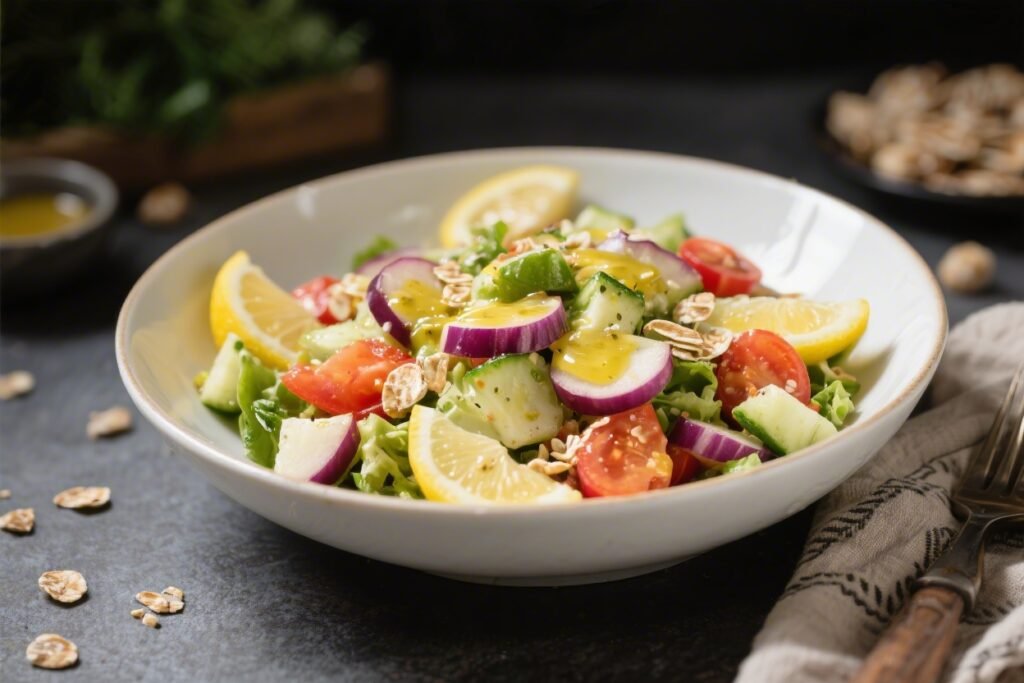
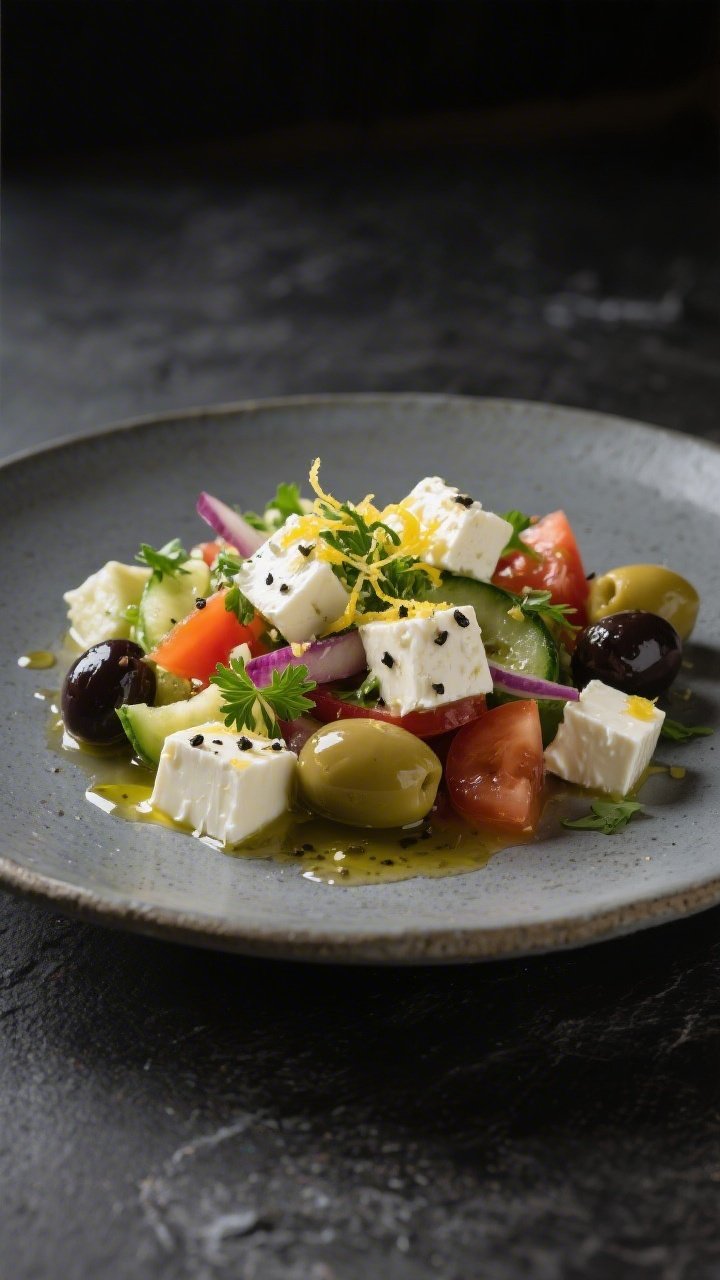
A crisp Greek salad has a way of waking up a meal in the best way. It’s crunchy, juicy, and full of clean flavors that feel both satisfying and light. This gluten-free version sticks to the classics and adds a zesty lemon dressing that brightens every bite.
It’s easy to throw together, perfect for busy weeknights or simple lunches, and pairs well with grilled chicken or fish. If you want a salad that tastes like sunshine and takes minimal effort, this is it.
Gluten-Free Greek Salad With Lemon Dressing - Fresh, Bright, and Easy
Ingredients
- For the salad:
- 1 large English cucumber, halved lengthwise and sliced
- 2 cups cherry or grape tomatoes, halved
- 1 medium red onion, thinly sliced
- 1 green bell pepper, seeded and thinly sliced
- 1/2 cup Kalamata olives, pitted and halved
- 6–8 oz feta cheese, cut into small cubes or crumbled
- 1/4 cup fresh flat-leaf parsley, chopped
- For the lemon dressing:
- 1/4 cup extra-virgin olive oil
- 3 tablespoons fresh lemon juice (about 1 large lemon)
- 1 teaspoon lemon zest
- 1 small garlic clove, finely minced
- 1 teaspoon dried oregano
- 1/2 teaspoon Dijon mustard (check label for gluten-free)
- 1/2 teaspoon sea salt, plus more to taste
- 1/4 teaspoon freshly ground black pepper
Instructions
- Prep the vegetables: Slice the cucumber, halve the tomatoes, thinly slice the red onion and bell pepper, and chop the parsley. Place everything in a large mixing bowl with the olives.
- Make the lemon dressing: In a small jar or bowl, whisk together the olive oil, lemon juice, lemon zest, garlic, oregano, Dijon, salt, and pepper until emulsified. Taste and adjust seasoning.
- Add the feta: Gently fold in the feta cubes or crumbles.If you prefer a cleaner look, you can place larger slabs of feta on top and crumble just before serving.
- Dress and toss: Pour about two-thirds of the dressing over the salad. Toss gently to coat without smashing the feta or tomatoes. Add more dressing as needed.
- Rest briefly: Let the salad sit for 5–10 minutes so the flavors mingle.This short rest makes a big difference in taste.
- Finish and serve: Sprinkle with parsley, add a pinch more salt or pepper if needed, and serve chilled or at room temperature.
What Makes This Special
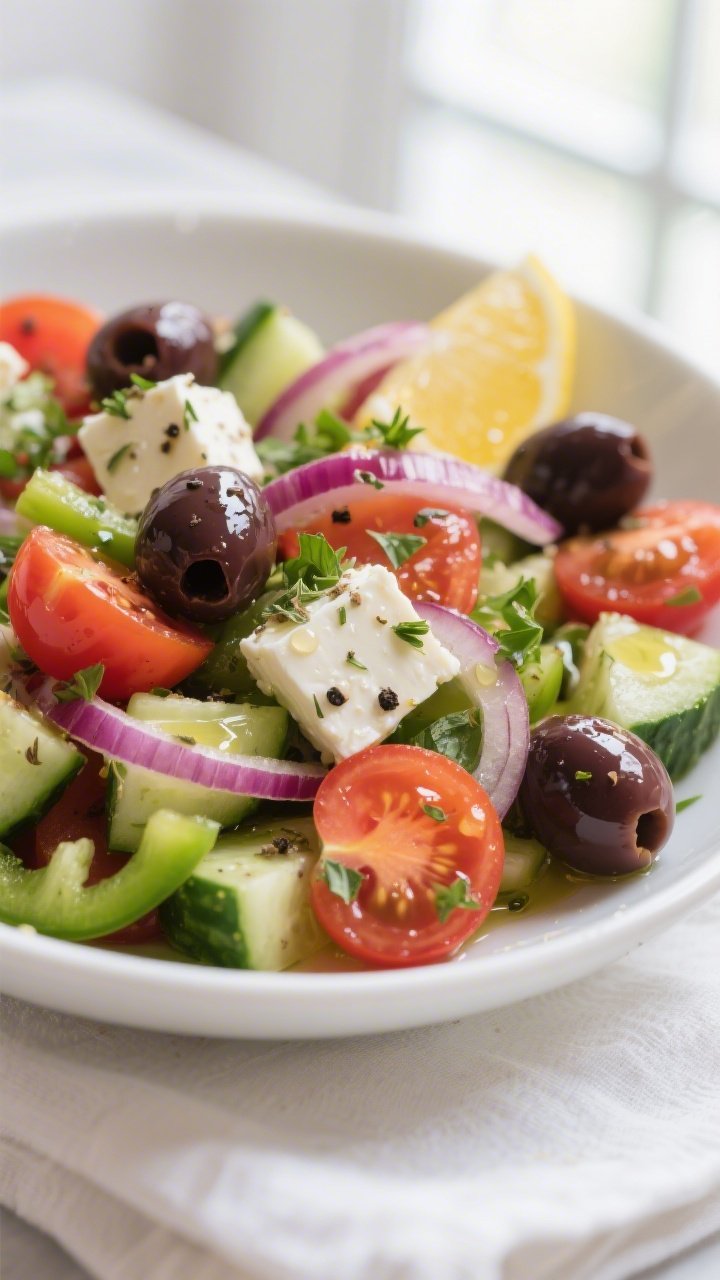
This salad leans on classic Greek ingredients and keeps them simple. The crunch of cucumber, sweetness of tomatoes, and briny kick of olives and feta are balanced by a sharp, clean lemon dressing.
Everything is naturally gluten-free, so there’s no swapping or fussing—just straightforward, fresh food.
- Bright, lemon-forward dressing: Fresh lemon juice and zest bring lively acidity without overpowering the veggies.
- Simple and reliable: No fancy steps, just quality ingredients and a quick toss.
- Meal-prep friendly: Chop the veggies ahead and dress just before serving.
- Customizable: Add protein or swap ingredients to fit your taste or what you have on hand.
Ingredients
- For the salad:
- 1 large English cucumber, halved lengthwise and sliced
- 2 cups cherry or grape tomatoes, halved
- 1 medium red onion, thinly sliced
- 1 green bell pepper, seeded and thinly sliced
- 1/2 cup Kalamata olives, pitted and halved
- 6–8 oz feta cheese, cut into small cubes or crumbled
- 1/4 cup fresh flat-leaf parsley, chopped
- For the lemon dressing:
- 1/4 cup extra-virgin olive oil
- 3 tablespoons fresh lemon juice (about 1 large lemon)
- 1 teaspoon lemon zest
- 1 small garlic clove, finely minced
- 1 teaspoon dried oregano
- 1/2 teaspoon Dijon mustard (check label for gluten-free)
- 1/2 teaspoon sea salt, plus more to taste
- 1/4 teaspoon freshly ground black pepper
Instructions
- Prep the vegetables: Slice the cucumber, halve the tomatoes, thinly slice the red onion and bell pepper, and chop the parsley. Place everything in a large mixing bowl with the olives.
- Make the lemon dressing: In a small jar or bowl, whisk together the olive oil, lemon juice, lemon zest, garlic, oregano, Dijon, salt, and pepper until emulsified. Taste and adjust seasoning.
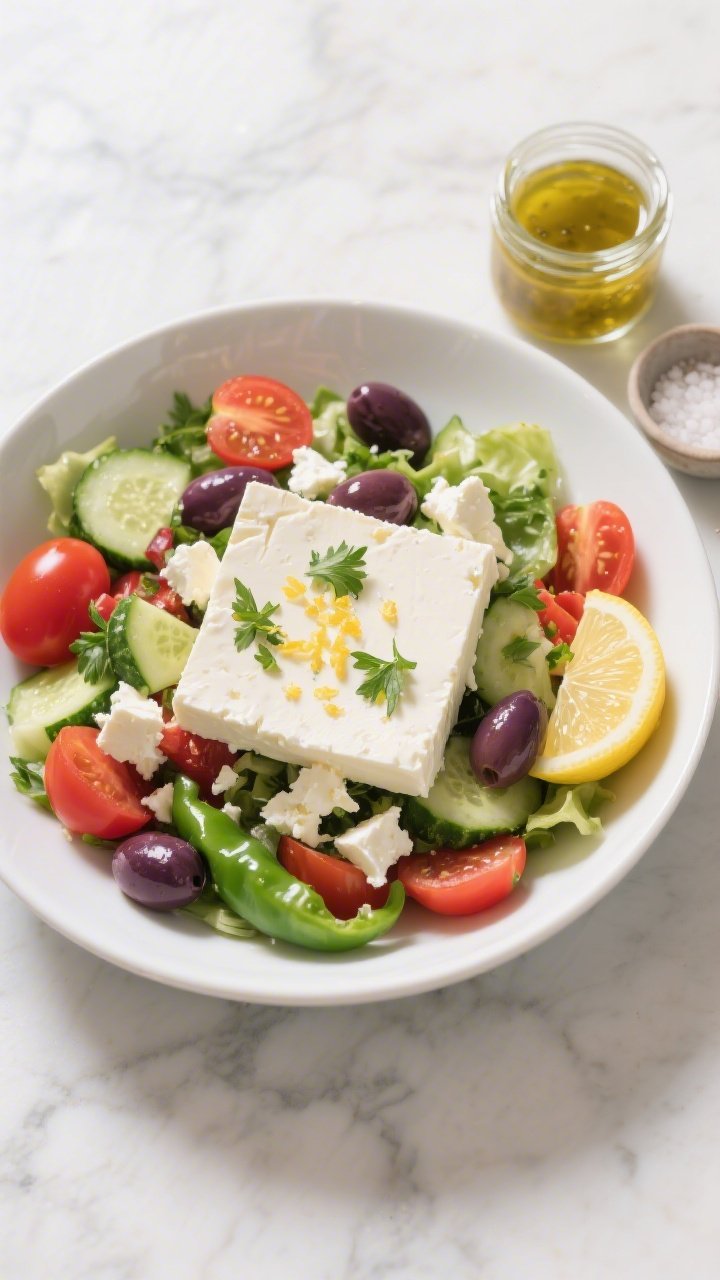
- Add the feta: Gently fold in the feta cubes or crumbles.
If you prefer a cleaner look, you can place larger slabs of feta on top and crumble just before serving.
- Dress and toss: Pour about two-thirds of the dressing over the salad. Toss gently to coat without smashing the feta or tomatoes. Add more dressing as needed.
- Rest briefly: Let the salad sit for 5–10 minutes so the flavors mingle.
This short rest makes a big difference in taste.
- Finish and serve: Sprinkle with parsley, add a pinch more salt or pepper if needed, and serve chilled or at room temperature.
How to Store
- Short-term: Store leftovers in an airtight container in the fridge for up to 2 days. The veggies will soften slightly but remain flavorful.
- Keep it crisp: If making ahead, store the chopped vegetables and feta separately from the dressing. Combine and dress within 30 minutes of serving.
- Dressing: The lemon dressing keeps well in the fridge for up to 5 days.
Shake or whisk before using.
- Avoid sogginess: Tomatoes release water over time. If prepping early, salt the tomatoes lightly and drain excess liquid before assembling.
Health Benefits
- Naturally gluten-free: All ingredients are inherently gluten-free, making this a safe, stress-free option for those avoiding gluten.
- Rich in antioxidants: Tomatoes and peppers provide vitamins A and C, while olives bring polyphenols that support heart health.
- Healthy fats: Extra-virgin olive oil offers monounsaturated fats that support cholesterol balance and overall cardiovascular wellness.
- Protein and calcium: Feta adds protein and calcium, supporting muscle function and bone health.
- High in fiber: Cucumbers, peppers, and tomatoes add hydration and fiber to support digestion and fullness.
Common Mistakes to Avoid
- Overdressing the salad: Start with less and add more as needed. Too much dressing can drown the flavors and make the salad soggy.
- Using mealy tomatoes: Choose firm, ripe cherry or grape tomatoes for better texture and sweetness.
- Skipping the lemon zest: The zest delivers fresh, citrusy aroma that boosts the whole dish without extra acidity.
- Adding salt too early: Salt draws moisture from veggies.
Season at the end to keep your salad crisp.
- Ignoring labels: While the salad is naturally gluten-free, always check the Dijon and feta labels to ensure no hidden gluten-containing additives.
Alternatives
- Vegan version: Swap feta for a dairy-free feta or use cubed, marinated tofu. Add capers for extra briny punch.
- No onions: Use thinly sliced scallions or chives for a milder bite, or soak red onion slices in cold water for 10 minutes to soften the sharpness.
- Herb variations: Try fresh dill, mint, or basil alongside or instead of parsley for a new twist.
- Extra crunch: Add sliced radishes or crisp romaine. If not strictly traditional, it still tastes great and keeps the gluten-free promise.
- Protein add-ins: Grilled chicken, shrimp, or chickpeas make it a more filling meal without complicating the flavors.
- Different olives: Mix Kalamata with green Castelvetrano olives for a softer, buttery note.
FAQ
Is feta cheese gluten-free?
Most feta is naturally gluten-free, but it’s smart to check labels for additives or flavorings.
Choose a brand that clearly states gluten-free if you’re sensitive or celiac.
Can I make the dressing without mustard?
Yes. The mustard helps emulsify and adds a gentle tang, but you can skip it. If you do, whisk the dressing a bit longer or add a small pinch of xanthan gum to help it hold together.
What can I use instead of Kalamata olives?
Try green olives like Castelvetrano for a milder, buttery flavor, or standard black olives for a softer taste.
Choose pitted olives to make eating easier.
How far in advance can I prep this salad?
You can chop the vegetables up to 24 hours ahead and keep them in separate containers. Add feta and dressing right before serving to maintain the best texture.
Can I use bottled lemon juice?
Fresh lemon juice is best for bright flavor. In a pinch, bottled juice works, but you’ll miss the fresh aroma and the zest, which really lifts the dressing.
What if my salad tastes too tart?
Add a little more olive oil and a pinch of salt to balance the acidity.
You can also stir in 1/4 teaspoon honey or maple syrup to soften the edges.
Is this salad suitable for meal prep?
Yes, with a small tweak. Keep the dressing separate and toss just before eating. If dressed, it’s still tasty the next day, just a bit softer.
Can I add grains and keep it gluten-free?
Absolutely.
Add cooked quinoa, millet, or brown rice to make it heartier. Keep the grains cool before mixing to avoid wilting the veggies.
In Conclusion
This Gluten-Free Greek Salad with Lemon Dressing is crisp, zesty, and endlessly useful. It’s a reliable side, a quick lunch, and a canvas for easy add-ins.
With simple ingredients and bold flavor, it proves that uncomplicated food can be the most satisfying. Keep the dressing on hand, and you’re never far from a fresh, bright meal that just works.
Printable Recipe Card
Want just the essential recipe details without scrolling through the article? Get our printable recipe card with just the ingredients and instructions.