
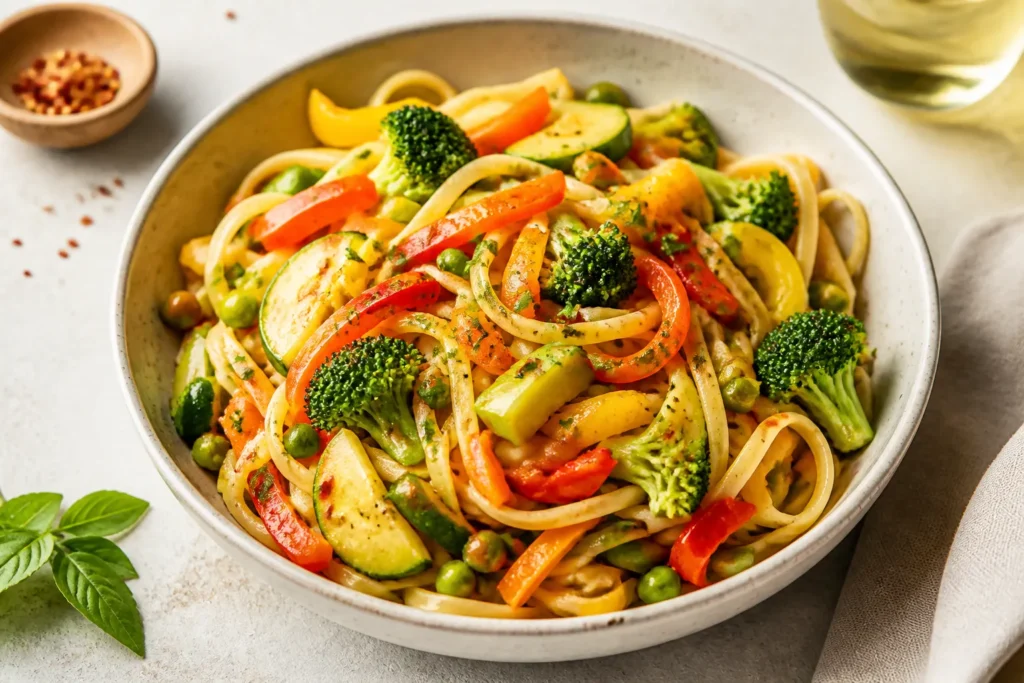
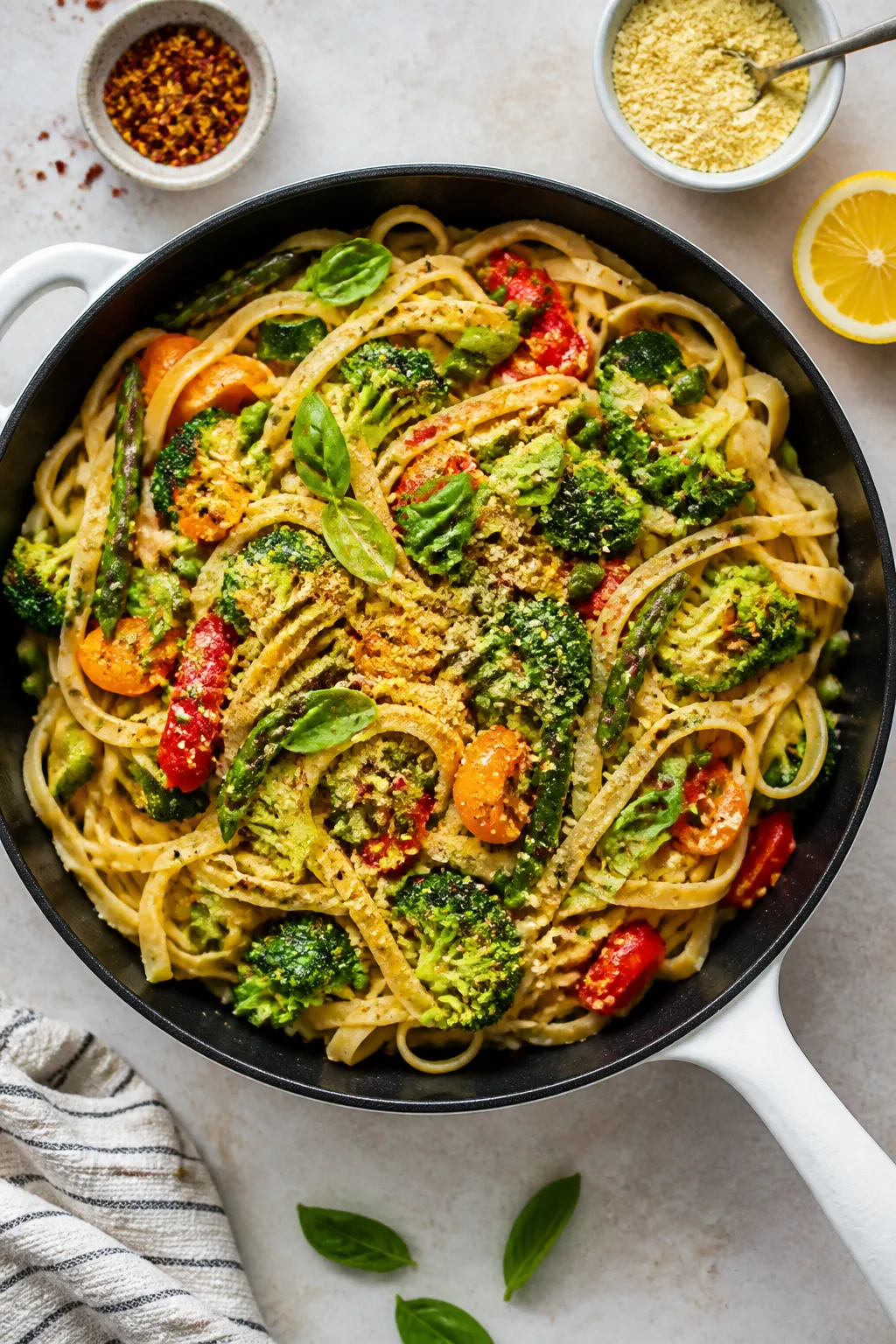
Pasta Primavera is that reliable, weeknight hero you can make without thinking too hard. It’s packed with colorful veggies, light but satisfying, and comes together in the time it takes to boil pasta. This vegan version keeps things simple while delivering creamy, bright flavor with no dairy.
If you’ve got a fridge drawer full of produce and a hungry household, this is your go-to. It’s the kind of meal you can tweak on the fly and still feel good about serving.
Easy Vegan Pasta Primavera Recipe for Busy Weeknights - Fresh, Fast, and Flavorful
Materials
- 12 ounces short pasta (penne, fusilli, or farfalle; use gluten-free if needed)
- 2 tablespoons extra-virgin olive oil
- 3 cloves garlic, thinly sliced
- 1 small red onion or 2 shallots, thinly sliced
- 1 cup broccoli florets, small bite-size
- 1 cup asparagus, sliced into 1-inch pieces (or green beans)
- 1 cup cherry tomatoes, halved
- 1 small zucchini, halved lengthwise and sliced
- 1 small yellow squash, halved lengthwise and sliced (optional)
- 1 cup peas (fresh or frozen)
- 1/2 teaspoon red pepper flakes (optional, to taste)
- 1/2 cup unsweetened oat milk or almond milk (or 1/3 cup cashew cream)
- 1/3 cup vegetable broth (plus more as needed)
- 1 tablespoon lemon zest (from 1 lemon)
- 2 tablespoons fresh lemon juice
- 1/4 cup nutritional yeast (for savory, cheesy flavor)
- 1/4 cup chopped fresh parsley (or basil)
- Salt and black pepper to taste
- Optional add-ins: 2 tablespoons capers, vegan parmesan for topping, toasted pine nuts
Instructions
- Boil the pasta: Bring a large pot of salted water to a boil. Cook pasta until just al dente.Reserve 1 cup of pasta water, then drain.
- Sauté aromatics: While pasta cooks, heat olive oil in a large skillet over medium heat. Add onion and a pinch of salt; cook 3–4 minutes until softened. Stir in garlic and red pepper flakes; cook 30 seconds until fragrant.
- Cook firm veggies first: Add broccoli and asparagus (or green beans).Sauté 3–4 minutes, stirring occasionally, until bright green and slightly tender.
- Add quick-cooking veggies: Stir in zucchini, yellow squash, and cherry tomatoes. Cook 3–4 minutes more until just tender but not mushy. Add peas and warm through for 1 minute.
- Build the sauce: Pour in vegetable broth and plant milk.Simmer 2 minutes. Stir in lemon zest, lemon juice, and nutritional yeast. Season with salt and pepper.
- Toss with pasta: Add drained pasta to the skillet.Toss well to coat, using splashes of reserved pasta water as needed to loosen and create a glossy, silky sauce.
- Finish with herbs: Stir in fresh parsley or basil. Taste and adjust seasoning with more lemon, salt, or pepper. Add capers or vegan parmesan if using.
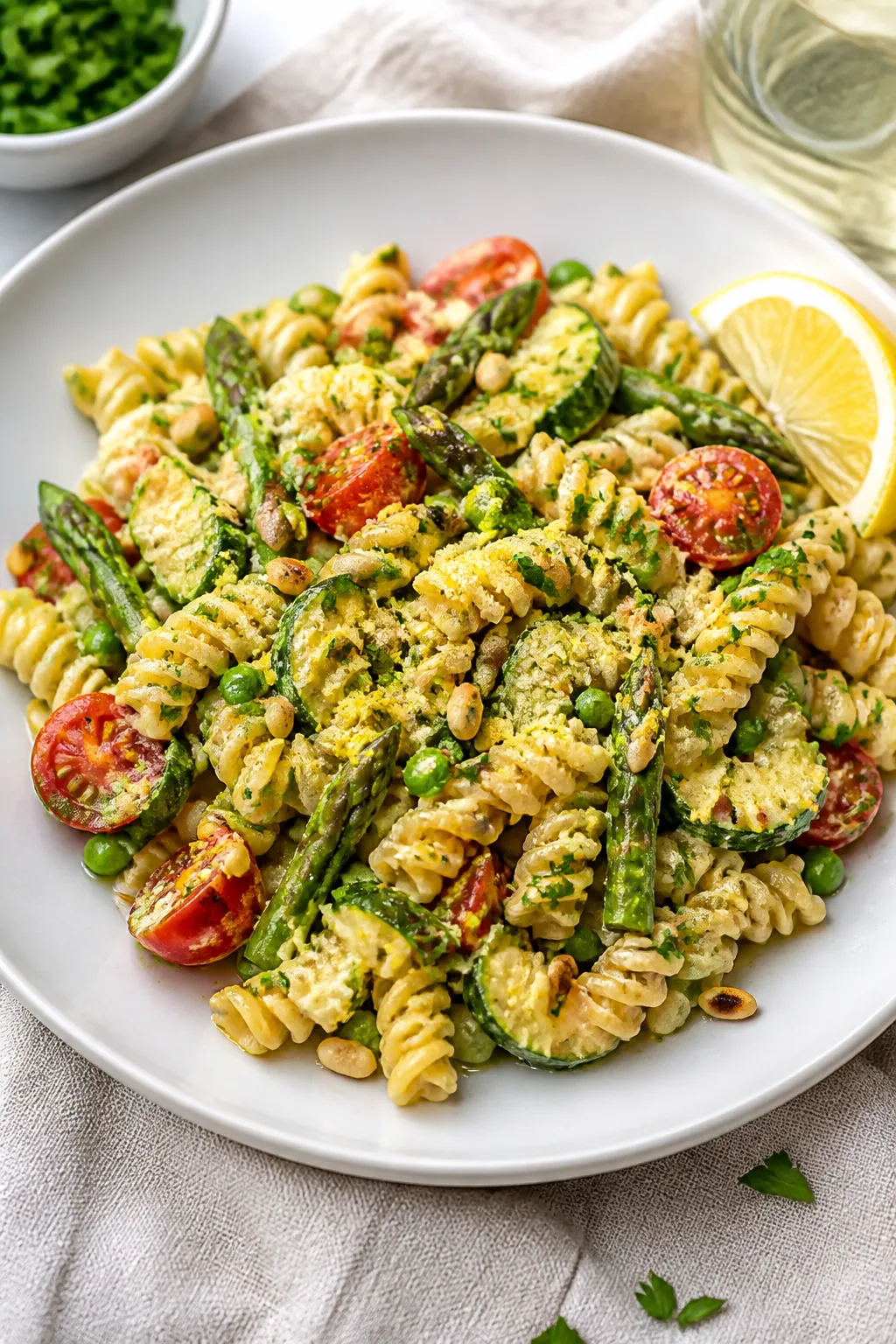
- Serve: Plate immediately.Garnish with extra herbs, a sprinkle of nutritional yeast or vegan parmesan, and toasted pine nuts if you like crunch.
What Makes This Special
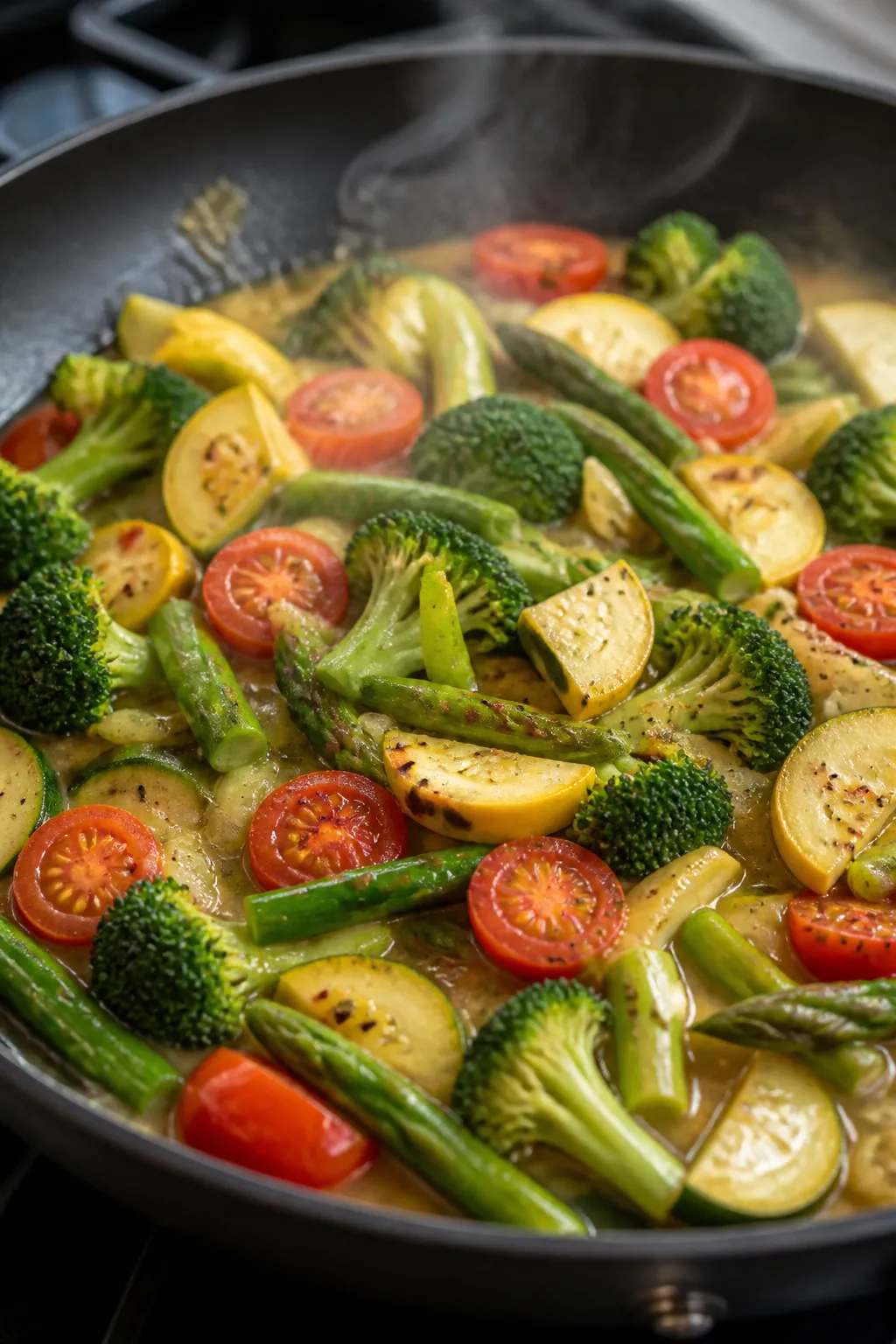
- Weeknight fast: Ready in about 25–30 minutes, start to finish.
- Flexible vegetables: Use what you have—no need to stick to one set of veggies.
- Creamy without cream: A splash of oat milk or cashew cream creates a silky sauce.
- Balanced and bright: Lemon, garlic, and fresh herbs keep it lively and light.
- One-pan friendly: Most of the action happens in one large skillet while pasta cooks.
Ingredients
- 12 ounces short pasta (penne, fusilli, or farfalle; use gluten-free if needed)
- 2 tablespoons extra-virgin olive oil
- 3 cloves garlic, thinly sliced
- 1 small red onion or 2 shallots, thinly sliced
- 1 cup broccoli florets, small bite-size
- 1 cup asparagus, sliced into 1-inch pieces (or green beans)
- 1 cup cherry tomatoes, halved
- 1 small zucchini, halved lengthwise and sliced
- 1 small yellow squash, halved lengthwise and sliced (optional)
- 1 cup peas (fresh or frozen)
- 1/2 teaspoon red pepper flakes (optional, to taste)
- 1/2 cup unsweetened oat milk or almond milk (or 1/3 cup cashew cream)
- 1/3 cup vegetable broth (plus more as needed)
- 1 tablespoon lemon zest (from 1 lemon)
- 2 tablespoons fresh lemon juice
- 1/4 cup nutritional yeast (for savory, cheesy flavor)
- 1/4 cup chopped fresh parsley (or basil)
- Salt and black pepper to taste
- Optional add-ins: 2 tablespoons capers, vegan parmesan for topping, toasted pine nuts
Instructions
- Boil the pasta: Bring a large pot of salted water to a boil. Cook pasta until just al dente.
Reserve 1 cup of pasta water, then drain.
- Sauté aromatics: While pasta cooks, heat olive oil in a large skillet over medium heat. Add onion and a pinch of salt; cook 3–4 minutes until softened. Stir in garlic and red pepper flakes; cook 30 seconds until fragrant.
- Cook firm veggies first: Add broccoli and asparagus (or green beans).
Sauté 3–4 minutes, stirring occasionally, until bright green and slightly tender.
- Add quick-cooking veggies: Stir in zucchini, yellow squash, and cherry tomatoes. Cook 3–4 minutes more until just tender but not mushy. Add peas and warm through for 1 minute.
- Build the sauce: Pour in vegetable broth and plant milk.
Simmer 2 minutes. Stir in lemon zest, lemon juice, and nutritional yeast. Season with salt and pepper.
- Toss with pasta: Add drained pasta to the skillet.
Toss well to coat, using splashes of reserved pasta water as needed to loosen and create a glossy, silky sauce.
- Finish with herbs: Stir in fresh parsley or basil. Taste and adjust seasoning with more lemon, salt, or pepper. Add capers or vegan parmesan if using.
- Serve: Plate immediately.
Garnish with extra herbs, a sprinkle of nutritional yeast or vegan parmesan, and toasted pine nuts if you like crunch.
Storage Instructions
- Refrigerator: Store in an airtight container for up to 3 days.
- Reheating: Warm gently on the stovetop with a splash of water or broth to loosen the sauce. Microwave in 45–60 second bursts, stirring between intervals.
- Freezing: Not ideal. The veggies can turn mushy and the sauce may separate.
If you must freeze, undercook the pasta and thaw overnight before reheating.
- Make-ahead tip: Chop veggies up to 2 days ahead and store them in separate containers. This cuts cook time way down on busy nights.
Health Benefits
- Veggie variety: A colorful mix boosts vitamins A, C, K, and folate, plus antioxidants that support immune health.
- Fiber-rich: Vegetables and pasta (especially whole-grain) promote fullness and support digestion.
- Heart-friendly fats: Olive oil provides monounsaturated fats that support healthy cholesterol levels.
- Plant-based protein: Peas and nutritional yeast add a gentle protein boost. Swap in chickpea pasta for even more.
- Lower in saturated fat: Creamy texture without dairy keeps it lighter while still satisfying.
Common Mistakes to Avoid
- Overcooking pasta: Go for just al dente.
It will cook a bit more when tossed with the hot sauce.
- Veggies too soft: Add them in stages. Firm vegetables first, delicate ones last.
- Skipping the pasta water: That starchy water is your secret to a silky, cohesive sauce.
- Under-seasoning: Taste and adjust with salt, pepper, and lemon. Brightness is key to a great primavera.
- Too many veggies at once: Crowding the pan can steam instead of sauté.
Use a large skillet or cook in batches.
Recipe Variations
- Creamier version: Blend 1/2 cup soaked cashews with 3/4 cup water and 1 tablespoon lemon juice. Use this instead of plant milk for a luscious sauce.
- Protein boost: Add chickpeas or pan-seared tofu cubes in the last few minutes.
- Gluten-free: Use gluten-free pasta and check labels on broth and vegan parmesan.
- Spring focus: Use asparagus, peas, leeks, and tender spinach. Finish with lots of lemon and dill.
- Summer garden: Try zucchini, cherry tomatoes, corn, and basil.
A few capers add a briny pop.
- Roasted twist: Roast the veggies at 425°F (220°C) with olive oil and salt for 15–20 minutes, then toss with the hot pasta and sauce.
- Garlic-lemon punch: Add 1 extra clove of garlic and an extra teaspoon of zest if you love bold flavors.
FAQ
Can I use frozen vegetables?
Yes. Keep the heat a bit higher to cook off extra moisture, and add frozen veggies directly to the skillet. They’ll soften quickly, so watch the timing.
What pasta shape works best?
Short shapes like penne, fusilli, farfalle, or rigatoni hold the sauce and veggies well.
Long pasta works too, but small vegetables cling better to twists and tubes.
How do I make it nut-free?
Use oat or soy milk instead of cashew cream. Check your vegan parmesan or skip it, and rely on nutritional yeast for that savory note.
Can I add spinach or kale?
Absolutely. Stir in a few handfuls of baby spinach or finely chopped kale in the last minute of cooking until wilted and bright.
Why is my sauce bland?
It likely needs more salt, acid, or both.
Add a pinch of salt, a squeeze of lemon, and a bit more nutritional yeast until the flavors pop.
How can I make it oil-free?
Sauté onions and garlic in a splash of vegetable broth instead of oil. Finish with extra lemon and herbs to keep the flavors vibrant.
What if my sauce is too thin?
Simmer for 1–2 more minutes to reduce, or stir in a teaspoon of nutritional yeast at a time. A small splash of pasta water can also help emulsify the sauce.
Final Thoughts
This Easy Vegan Pasta Primavera proves that fast food at home can still be colorful, fresh, and deeply satisfying.
With a smart mix of veggies, a bright, creamy sauce, and pantry-friendly staples, it fits neatly into even the busiest weeknight. Keep the method the same and swap in whatever produce you’ve got. You’ll have a reliable, crowd-pleasing dinner on the table in under half an hour—no stress, just good food.
Printable Recipe Card
Want just the essential recipe details without scrolling through the article? Get our printable recipe card with just the ingredients and instructions.