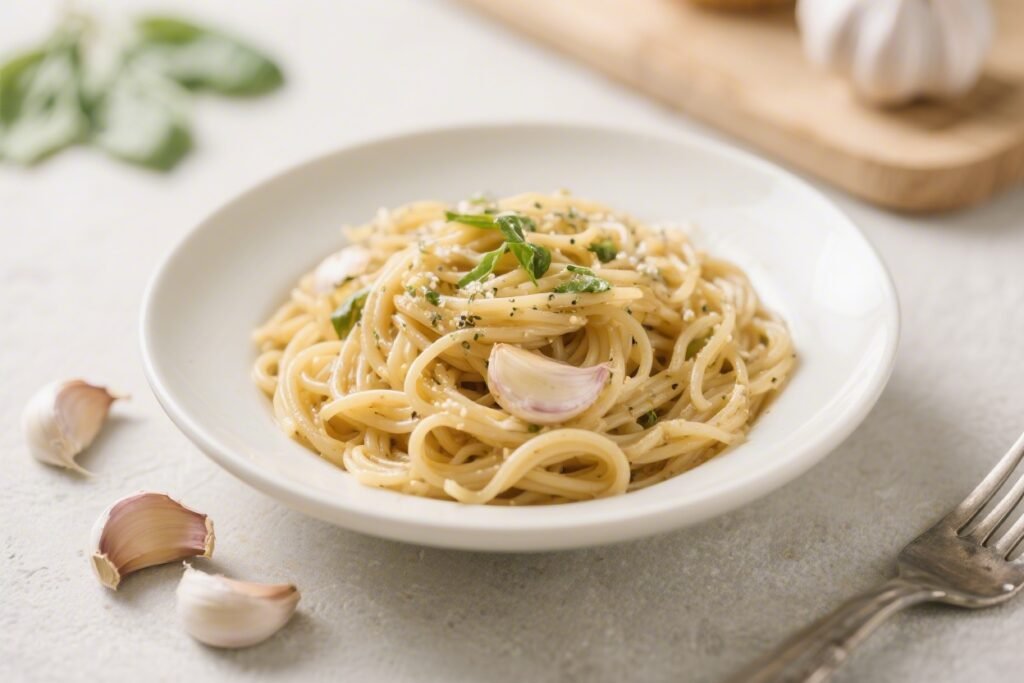
This is the kind of weeknight dinner that feels like a win: fast, satisfying, and full of garlicky goodness. In about 15 minutes, you can have a bowl of glossy, gluten-free pasta coated in a simple garlic and olive oil sauce that tastes like you put in way more effort. It’s affordable, comforting, and endlessly adaptable.
You can keep it plain and classic or dress it up with veggies, protein, or a sprinkle of cheese. If you need a go-to gluten-free meal that doesn’t feel like a compromise, this is it.
15-Minute Gluten-Free Garlic Pasta - Fast, Flavorful, and Weeknight-Friendly
Ingredients
- 8 ounces gluten-free spaghetti or linguine (brown rice, corn-rice blends, or chickpea pasta all work)
- 4 tablespoons extra-virgin olive oil (good quality makes a difference)
- 4–6 cloves fresh garlic, thinly sliced
- 1/4–1/2 teaspoon red pepper flakes (adjust to your heat level)
- 1/2 teaspoon kosher salt, plus more for pasta water
- Freshly ground black pepper, to taste
- 1/2 lemon (zest and juice)
- 1/2 cup reserved pasta cooking water
- 2 tablespoons chopped fresh parsley (optional but bright and fresh)
- Grated Parmesan or Pecorino Romano (optional; skip for dairy-free)
Instructions
- Salt your water generously. Fill a large pot with water and add a big pinch of salt (it should taste like the sea). This is your first chance to season the pasta from the inside out.
- Boil the pasta. Cook the gluten-free pasta according to package directions, but check it 1–2 minutes early.You want it just shy of al dente. Reserve at least 1/2 cup of the starchy cooking water before draining.
- Heat the olive oil. While the pasta cooks, warm the olive oil in a large skillet over medium heat. You want it hot but not smoking. This helps the garlic bloom without burning.
- Sauté the garlic and chili flakes. Add the sliced garlic and red pepper flakes to the oil.Cook gently, stirring, for 60–90 seconds until the garlic is fragrant and lightly golden at the edges. Do not let it brown deeply or it will taste bitter.
- Add lemon zest. Stir in the lemon zest for a burst of citrus aroma. This lifts the dish and balances the richness of the oil.
- Combine pasta and sauce. Add the drained pasta directly to the skillet. Toss to coat the strands in the garlicky oil.
- Create the silky sauce. Pour in a splash of the reserved pasta water and toss vigorously.The starches emulsify with the oil to form a glossy sauce. Add more water a little at a time until it clings to the pasta without pooling.
- Season to taste. Add salt, black pepper, and a squeeze of lemon juice. Toss again and taste.Adjust heat with more chili flakes and brightness with more lemon if needed.
- Finish with herbs and cheese (optional). Off the heat, fold in chopped parsley. If using, sprinkle with Parmesan or Pecorino for savory depth.
- Serve immediately. Gluten-free pasta is best hot and fresh when the texture is at its peak.
What Makes This Special
This recipe is a streamlined version of the Italian classic aglio e olio, tailored for gluten-free pasta without losing that silky, garlicky magic. The key is building flavor quickly with fresh garlic, good olive oil, and a touch of pasta water to create an emulsified sauce.
It’s naturally dairy-free as written, budget-friendly, and ready in the time it takes to boil water. Best of all, it’s a base recipe you can customize to your taste in seconds.
What You’ll Need
- 8 ounces gluten-free spaghetti or linguine (brown rice, corn-rice blends, or chickpea pasta all work)
- 4 tablespoons extra-virgin olive oil (good quality makes a difference)
- 4–6 cloves fresh garlic, thinly sliced
- 1/4–1/2 teaspoon red pepper flakes (adjust to your heat level)
- 1/2 teaspoon kosher salt, plus more for pasta water
- Freshly ground black pepper, to taste
- 1/2 lemon (zest and juice)
- 1/2 cup reserved pasta cooking water
- 2 tablespoons chopped fresh parsley (optional but bright and fresh)
- Grated Parmesan or Pecorino Romano (optional; skip for dairy-free)
Step-by-Step Instructions
- Salt your water generously. Fill a large pot with water and add a big pinch of salt (it should taste like the sea). This is your first chance to season the pasta from the inside out.
- Boil the pasta. Cook the gluten-free pasta according to package directions, but check it 1–2 minutes early.
You want it just shy of al dente. Reserve at least 1/2 cup of the starchy cooking water before draining.
- Heat the olive oil. While the pasta cooks, warm the olive oil in a large skillet over medium heat. You want it hot but not smoking. This helps the garlic bloom without burning.
- Sauté the garlic and chili flakes. Add the sliced garlic and red pepper flakes to the oil.
Cook gently, stirring, for 60–90 seconds until the garlic is fragrant and lightly golden at the edges. Do not let it brown deeply or it will taste bitter.
- Add lemon zest. Stir in the lemon zest for a burst of citrus aroma. This lifts the dish and balances the richness of the oil.
- Combine pasta and sauce. Add the drained pasta directly to the skillet. Toss to coat the strands in the garlicky oil.
- Create the silky sauce. Pour in a splash of the reserved pasta water and toss vigorously.
The starches emulsify with the oil to form a glossy sauce. Add more water a little at a time until it clings to the pasta without pooling.
- Season to taste. Add salt, black pepper, and a squeeze of lemon juice. Toss again and taste.
Adjust heat with more chili flakes and brightness with more lemon if needed.
- Finish with herbs and cheese (optional). Off the heat, fold in chopped parsley. If using, sprinkle with Parmesan or Pecorino for savory depth.
- Serve immediately. Gluten-free pasta is best hot and fresh when the texture is at its peak.
Storage Instructions
- Refrigeration: Store leftovers in an airtight container for up to 2 days. Drizzle with a teaspoon of olive oil before refrigerating to keep it from drying out.
- Reheating: Rewarm gently in a skillet over low heat with a splash of water or broth to loosen the sauce.
Avoid the microwave if possible, as gluten-free pasta can turn rubbery.
- Freezing: Not recommended. Gluten-free pasta tends to become mushy after freezing and thawing.
Benefits of This Recipe
- Fast: On the table in 15 minutes, with pantry staples.
- Gluten-free without fuss: Simple technique keeps the pasta tender and the sauce silky.
- Light but satisfying: Olive oil and garlic deliver big flavor without heavy cream or butter.
- Customizable: Add veggies, protein, or cheese to make it your own.
- Budget-friendly: Minimal ingredients with restaurant-level payoff.
Pitfalls to Watch Out For
- Overcooking gluten-free pasta: It can go from al dente to mush quickly. Start tasting early and pull it just before done.
- Burning the garlic: Brown equals bitter.
Keep heat moderate and watch closely.
- Skipping the pasta water: This is crucial for emulsifying the sauce. Always reserve some before draining.
- Using tired garlic or old oil: Fresh garlic and good olive oil make this dish shine. Stale ingredients will dull the flavor.
- Forgetting to season: Salt the water well and adjust seasonings at the end for balance.
Alternatives
- Veggie boost: Toss in baby spinach, cherry tomatoes, or sautéed zucchini.
Add them to the skillet right after the garlic so they cook quickly.
- Protein options: Add grilled chicken, sautéed shrimp, or canned chickpeas. For shrimp, cook them in the garlicky oil before adding the pasta.
- Dairy-free richness: Sprinkle with toasted gluten-free breadcrumbs or nutritional yeast instead of cheese.
- Herb swaps: Use basil, chives, or dill if parsley isn’t on hand.
- Citrus twist: Swap lemon for a splash of white wine (let it simmer 30 seconds) or add a few capers for briny pop.
- Pasta shapes: Try gluten-free fusilli or penne. Shapes with ridges catch the sauce nicely.
FAQ
What type of gluten-free pasta works best for this recipe?
Brown rice or corn-rice blends give the most familiar texture.
Chickpea or lentil pasta works, too, but can be slightly firmer and more filling. Choose a brand you trust and avoid overcooking by checking early.
Can I make this without spice?
Yes. Skip the red pepper flakes and add a pinch more black pepper for gentle warmth.
A little extra lemon zest also brightens the flavor without heat.
How do I prevent gluten-free pasta from sticking?
Use plenty of boiling water and stir in the first 1–2 minutes. Don’t add oil to the pot—it prevents sauce from clinging later. Toss the drained pasta with the sauce right away so it doesn’t clump.
Is this recipe dairy-free?
It is dairy-free as written.
Cheese is optional. If you want a creamy note without dairy, stir in a tablespoon of tahini or a spoonful of dairy-free parmesan at the end.
Can I add garlic powder instead of fresh garlic?
Fresh garlic is key for flavor and aroma here. If you’re in a pinch, use 1/2 teaspoon garlic powder and warm it gently in the oil, but expect a milder, less nuanced result.
What if my sauce looks greasy?
Add a bit more hot pasta water and toss vigorously over medium heat.
The starch helps emulsify the oil, turning it glossy and cohesive. Season again after adjusting.
How do I scale this for a crowd?
Double the ingredients and use a wide skillet so the pasta can toss easily. Reserve extra pasta water and add it gradually to keep the sauce silky without drowning the noodles.
Can I make it ahead?
This dish is best fresh.
If you must prep, slice the garlic, chop herbs, and zest the lemon in advance. Cook the pasta and finish the sauce right before serving for the best texture.
In Conclusion
15-Minute Gluten-Free Garlic Pasta proves you don’t need a long ingredient list or hours in the kitchen to eat well. With a few pantry staples and smart technique, you get a bright, balanced bowl that satisfies on any weeknight.
Keep it classic, or use it as a canvas for whatever you have on hand. Either way, it’s fast, flexible, and seriously delicious.
Printable Recipe Card
Want just the essential recipe details without scrolling through the article? Get our printable recipe card with just the ingredients and instructions.