
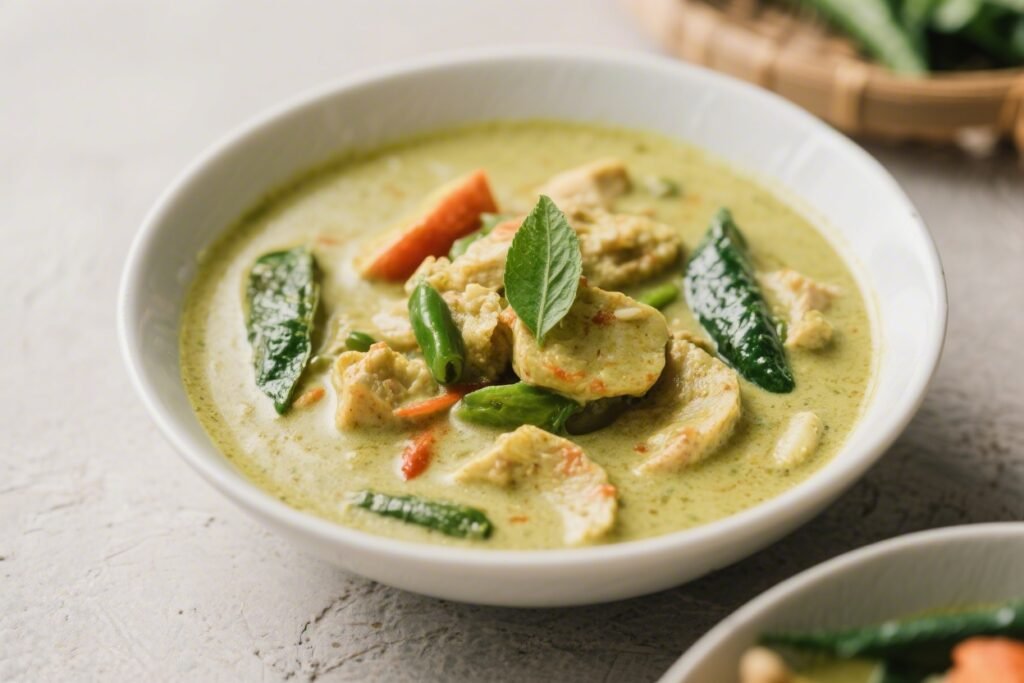
This Gluten-Free Thai Green Curry Recipe packed with authentic flavours, creamy coconut goodness for easy family dinners every time. brings big flavor with minimal fuss. It’s creamy, aromatic, and loaded with tender vegetables and your protein of choice. The trick is choosing the right curry paste and balancing heat with coconut richness.
You’ll get silky sauce, crisp veggies, and that signature limey finish. Make it on a weeknight, or double it for a cozy weekend meal with leftovers that taste even better the next day.
Gluten-Free Thai Green Curry – Bright, Fragrant, and Comforting
Ingredients
- Green curry paste: 2–3 tablespoons (check label for gluten-free; brands like Maesri or homemade are good options)
- Coconut milk: 2 cans (13.5 oz each), full-fat for creaminess
- Chicken thighs or breast, tofu, or shrimp: About 1 pound, cut into bite-size pieces (use extra-firm tofu if plant-based)
- Vegetables: 3–4 cups total such as bell peppers, zucchini, green beans, broccoli, mushrooms, bamboo shoots, or baby corn
- Onion or shallots: 1 small, sliced
- Garlic: 3 cloves, minced
- Ginger: 1 tablespoon, minced (or galangal if you have it)
- Gluten-free fish sauce: 1–2 tablespoons (or tamari for vegan)
- Brown sugar or coconut sugar: 1–2 teaspoons
- Lime juice: 1–2 tablespoons, plus extra wedges for serving
- Thai basil: A handful, torn (substitute regular basil if needed)
- Kaffir lime leaves: 2–3, torn (optional but amazing)
- Neutral oil: 1–2 tablespoons (avocado, canola, or coconut oil)
- Gluten-free stock or water: 1/2–1 cup, as needed to thin
- Jasmine rice or rice noodles: For serving (ensure noodles are gluten-free)
- Sea salt: To taste
- Fresh chilies: Optional, for extra heat
Instructions
- Prep your ingredients. Slice the veggies, cut your protein, mince the aromatics, and open the coconut milk.Keep everything handy. This goes quickly once you start cooking.
- Warm the oil and bloom the paste. Heat oil in a large skillet or pot over medium heat. Add the green curry paste and stir for 1–2 minutes until fragrant.This step wakes up the spices and gives you deeper flavor.
- Add aromatics. Stir in the garlic and ginger (and onions/shallots). Cook 1–2 minutes until softened but not browned.
- Build the sauce. Pour in 1 can of coconut milk and whisk to combine with the paste. Add the kaffir lime leaves if using.Bring to a gentle simmer.
- Add protein. Add chicken or tofu and simmer 5–7 minutes. For shrimp, wait and add later since it cooks fast. Keep heat medium-low to avoid curdling the coconut milk.
- Season the base. Stir in fish sauce (or tamari), sugar, and a pinch of salt.Taste and adjust. You want a balance of salty-sweet with a gentle heat.
- Add vegetables. Stir in firmer veggies first (broccoli, green beans), then after 2–3 minutes add tender ones (zucchini, bell peppers, mushrooms). Add the second can of coconut milk and a splash of stock or water if it looks too thick.
- Finish proteins. If using shrimp, add now and cook 2–3 minutes until just pink.For chicken, check a piece for doneness. Tofu just needs to warm through.
- Brighten and freshen. Turn off heat. Stir in lime juice and Thai basil.Taste again and add a bit more fish sauce, sugar, or lime to balance. The final flavor should be bold yet smooth.
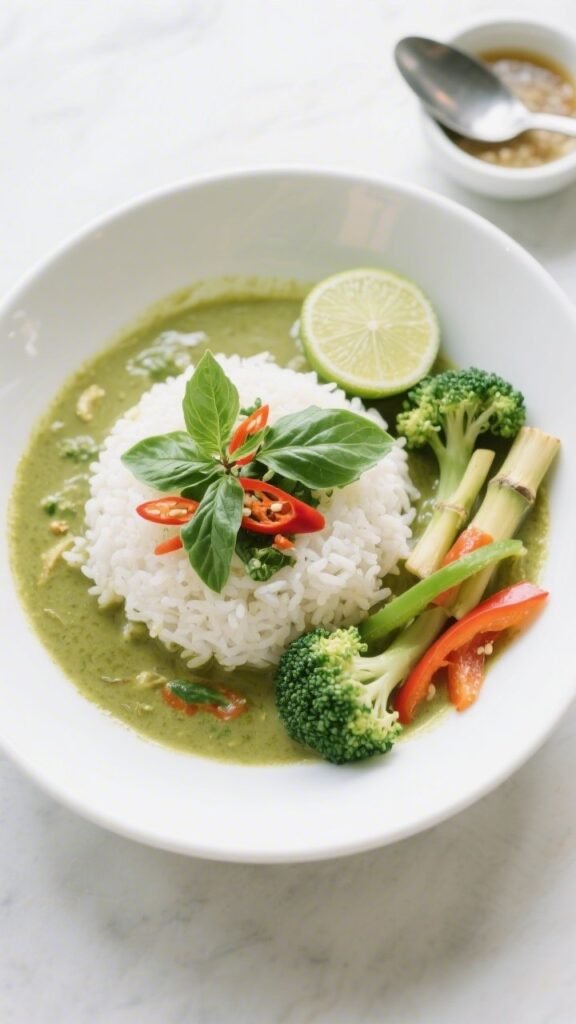
- Serve hot. Spoon over jasmine rice or toss with rice noodles. Top with extra basil, sliced chilies, and lime wedges.Enjoy right away for the best texture.
What Makes This Special
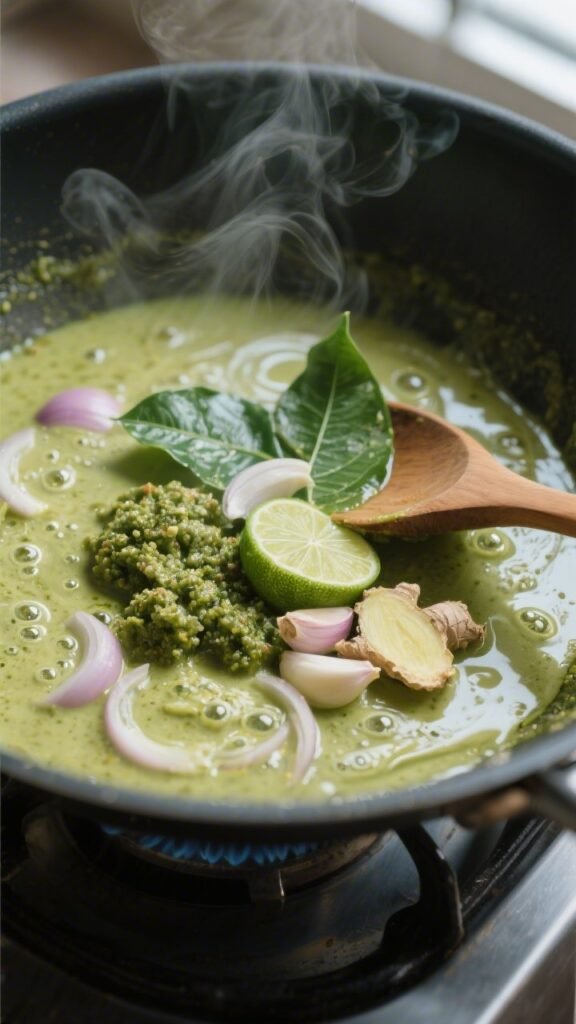
Thai green curry is all about contrast: spicy, creamy, salty, sweet, and fresh. This version keeps everything naturally gluten-free without feeling like a compromise.
The key is using a reliable curry paste and gluten-free fish sauce. You get a restaurant-level curry at home with simple steps and pantry-friendly ingredients. It’s adaptable too, so you can use chicken, tofu, shrimp, or just veggies and still get a full, satisfying bowl.
What You’ll Need
- Green curry paste: 2–3 tablespoons (check label for gluten-free; brands like Maesri or homemade are good options)
- Coconut milk: 2 cans (13.5 oz each), full-fat for creaminess
- Chicken thighs or breast, tofu, or shrimp: About 1 pound, cut into bite-size pieces (use extra-firm tofu if plant-based)
- Vegetables: 3–4 cups total such as bell peppers, zucchini, green beans, broccoli, mushrooms, bamboo shoots, or baby corn
- Onion or shallots: 1 small, sliced
- Garlic: 3 cloves, minced
- Ginger: 1 tablespoon, minced (or galangal if you have it)
- Gluten-free fish sauce: 1–2 tablespoons (or tamari for vegan)
- Brown sugar or coconut sugar: 1–2 teaspoons
- Lime juice: 1–2 tablespoons, plus extra wedges for serving
- Thai basil: A handful, torn (substitute regular basil if needed)
- Kaffir lime leaves: 2–3, torn (optional but amazing)
- Neutral oil: 1–2 tablespoons (avocado, canola, or coconut oil)
- Gluten-free stock or water: 1/2–1 cup, as needed to thin
- Jasmine rice or rice noodles: For serving (ensure noodles are gluten-free)
- Sea salt: To taste
- Fresh chilies: Optional, for extra heat
Instructions
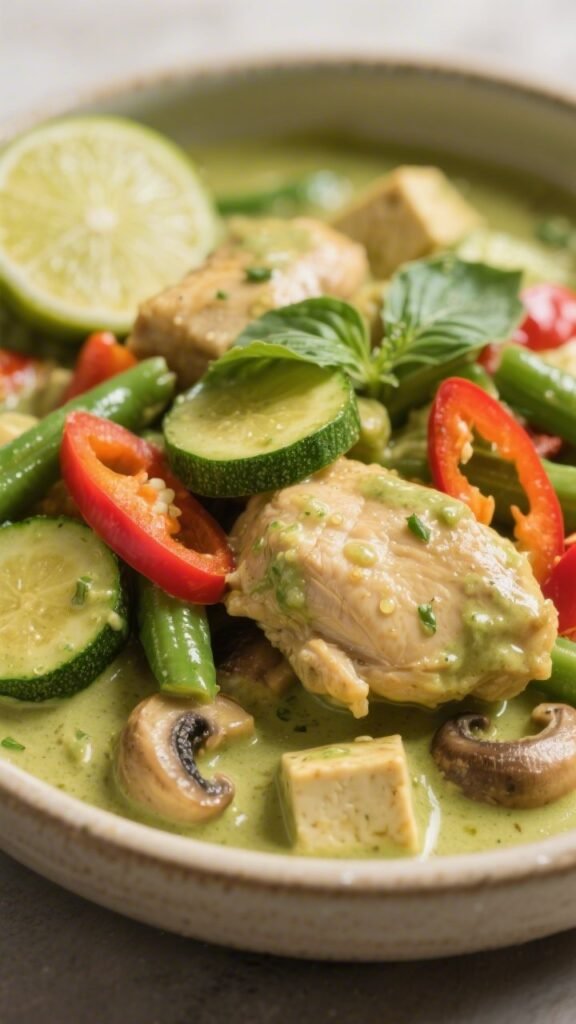
- Prep your ingredients. Slice the veggies, cut your protein, mince the aromatics, and open the coconut milk.
Keep everything handy. This goes quickly once you start cooking.
- Warm the oil and bloom the paste. Heat oil in a large skillet or pot over medium heat. Add the green curry paste and stir for 1–2 minutes until fragrant.
This step wakes up the spices and gives you deeper flavor.
- Add aromatics. Stir in the garlic and ginger (and onions/shallots). Cook 1–2 minutes until softened but not browned.
- Build the sauce. Pour in 1 can of coconut milk and whisk to combine with the paste. Add the kaffir lime leaves if using.
Bring to a gentle simmer.
- Add protein. Add chicken or tofu and simmer 5–7 minutes. For shrimp, wait and add later since it cooks fast. Keep heat medium-low to avoid curdling the coconut milk.
- Season the base. Stir in fish sauce (or tamari), sugar, and a pinch of salt.
Taste and adjust. You want a balance of salty-sweet with a gentle heat.
- Add vegetables. Stir in firmer veggies first (broccoli, green beans), then after 2–3 minutes add tender ones (zucchini, bell peppers, mushrooms). Add the second can of coconut milk and a splash of stock or water if it looks too thick.
- Finish proteins. If using shrimp, add now and cook 2–3 minutes until just pink.
For chicken, check a piece for doneness. Tofu just needs to warm through.
- Brighten and freshen. Turn off heat. Stir in lime juice and Thai basil.
Taste again and add a bit more fish sauce, sugar, or lime to balance. The final flavor should be bold yet smooth.
- Serve hot. Spoon over jasmine rice or toss with rice noodles. Top with extra basil, sliced chilies, and lime wedges.
Enjoy right away for the best texture.
Keeping It Fresh
Store leftovers in an airtight container for up to 3–4 days in the fridge. The flavors will meld and get even better by day two. Reheat gently on the stovetop over low heat or in the microwave at 50–70% power to avoid splitting the coconut milk.
If it thickens after chilling, add a splash of water or stock. Keep rice separate so it doesn’t soak up all the sauce.
Why This is Good for You
– Protein options: Chicken, tofu, or shrimp make this filling without feeling heavy. – Veggie-packed: Bell peppers, greens, and broccoli add fiber, vitamins, and color. – Healthy fats: Coconut milk provides satisfying fats that help you absorb fat-soluble nutrients. – Herbs and spices: Green curry paste, basil, and lime offer antioxidants and lively, fresh flavor that helps you crave more vegetables. – Gluten-free and balanced: With rice or rice noodles, it’s a naturally gluten-free meal that still hits all the right notes.
What Not to Do
– Don’t boil hard. Vigorous boiling can cause coconut milk to split and toughen your protein. Keep it at a gentle simmer. – Don’t skip label checks. Not all curry pastes or fish sauces are gluten-free.
A quick check prevents surprises. – Don’t add all veggies at once. Firmer vegetables need more time; tender ones should go in later to stay crisp. – Don’t forget to taste. Green curry is about balance. Adjust salt, sweetness, and acidity at the end. – Don’t overcrowd the pan. If you double the recipe, use a larger pot so everything cooks evenly.
Alternatives
– Protein swaps: Try turkey, firm white fish (add near the end), tempeh, or chickpeas. – Dairy-free but creamier: Use coconut cream for a thicker, richer sauce; thin with water as needed. – Veggie variations: Add spinach, snap peas, eggplant, or carrots. Frozen peas are a quick, sweet pop at the end. – No fish sauce: Use tamari plus a squeeze more lime.
A dash of mushroom powder or a bit of miso (ensure gluten-free) adds umami. – Lower heat: Use less curry paste and skip fresh chilies. – More heat: Add sliced Thai bird’s eye chilies or a pinch of chili flakes while blooming the paste. – No kaffir lime leaves: Add extra lime zest or a little more lime juice at the end for brightness.
FAQ
How do I know if my curry paste is gluten-free?
Check the ingredient list for wheat, barley, or malt. Look for a gluten-free label when possible. Many Thai brands are naturally gluten-free, but formulas can change, so always confirm.
Can I make this totally vegan?
Yes.
Use tofu or chickpeas, swap fish sauce for tamari, and skip shrimp or chicken. Everything else stays the same, and the flavor is still bold and aromatic.
Why did my coconut milk split?
It likely boiled too hard or heated too quickly. Keep the curry at a gentle simmer and stir regularly.
If it does split, it’s still safe to eat—just not as silky.
Can I freeze Gluten-Free Thai Green Curry Recipe?
You can, but coconut milk can change texture after freezing. If you plan to freeze, undercook the vegetables slightly and cool fully before freezing. Thaw in the fridge and reheat gently, adding a splash of fresh coconut milk to smooth it out.
What’s the best rice to serve with this?
Jasmine rice is classic and soaks up the sauce well.
For extra fragrance, rinse it before cooking. Rice noodles are also great if you prefer a slurpable bowl.
How spicy is green curry supposed to be?
It ranges from mild to fairly hot depending on the paste and how much you use. Start with 2 tablespoons and add more to taste.
You can also tame heat with extra coconut milk or a little sugar.
Do I need kaffir lime leaves?
They’re optional but add a bright, citrusy note you’ll notice. If you can’t find them, use lime zest or a touch more lime juice at the end.
Final Thoughts
Gluten-free Thai green curry is comfort food with character—silky, zesty, and full of life. With a good curry paste and a few smart swaps, you’ll get a balanced, restaurant-style bowl at home.
With this Gluten-Free Thai Green Curry Recipe, keep the heat gentle, taste as you go, and finish with fresh lime and basil. Once you master the rhythm, this becomes a reliable weeknight favorite you can tweak to match your mood and whatever’s in the fridge.
Printable Recipe Card
Want just the essential recipe details without scrolling through the article? Get our printable recipe card with just the ingredients and instructions.