
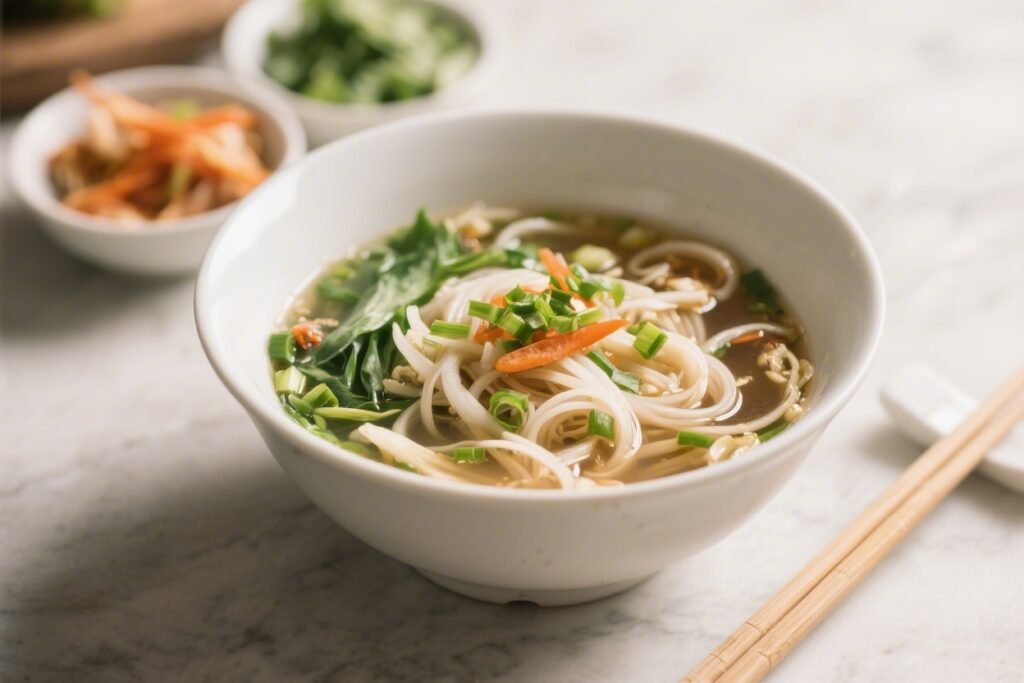
Pho is one of those bowls that comforts from the first sip. Clear, aromatic broth, soft rice noodles, and fresh herbs come together in a way that feels both light and deeply satisfying. If you’re avoiding gluten, the good news is that classic Vietnamese pho is naturally close to gluten-free.
With a few smart choices, you can make it fully safe without losing any of the flavor. This version keeps all the soul of traditional pho while staying simple enough for a weeknight.
Gluten-Free Vietnamese Pho Recipe – Comforting, Aromatic Noodle Soup
Ingredients
- Beef bones (marrow and knuckle) or a mix of beef shank and oxtail; 3–4 pounds
- Beef cuts for serving: thinly sliced sirloin, brisket, or cooked shredded chicken for a different protein
- Onions (2 large), halved
- Fresh ginger (4–5 inches), sliced lengthwise
- Whole spices: star anise (6), cinnamon sticks (2), whole cloves (6), coriander seeds (2 tablespoons), black peppercorns (1 tablespoon), cardamom pods (optional, 2)
- Fish sauce (gluten-free; check the label), 3–4 tablespoons
- Rock sugar or brown sugar, 1–2 tablespoons
- Sea salt
- Rice noodles (banh pho, small to medium width), 12–16 ounces; verify gluten-free
- Herbs and toppings: fresh Thai basil, cilantro, scallions, mint (optional), bean sprouts, lime wedges, thinly sliced onion
- Chiles: Thai bird or jalapeño, thinly sliced
- Gluten-free soy alternative (tamari or coconut aminos), optional
- Gluten-free hoisin and sriracha (optional; check labels)
Instructions
- Parboil the bones: Place bones and beef shank (if using) in a large pot. Cover with cold water. Bring to a rapid boil for 5–7 minutes.Drain and rinse bones and pot to remove impurities. This keeps the broth clear.
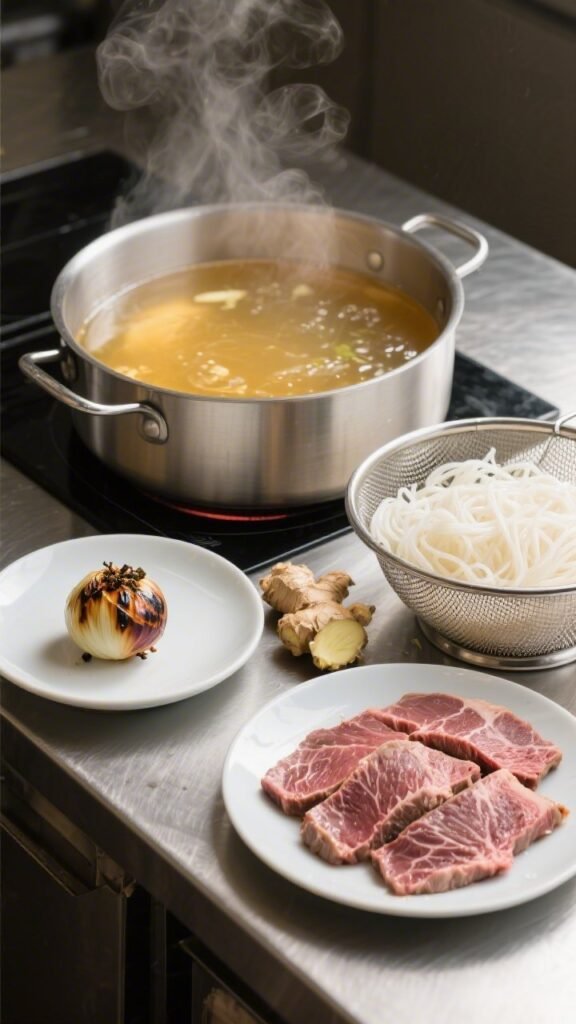
- Char aromatics: On a grill, broiler, or dry skillet, char onion halves and ginger until deeply browned and slightly blackened in spots, 5–8 minutes. This adds sweetness and smokiness.
- Toast spices: In a dry pan, toast star anise, cinnamon, cloves, coriander seeds, peppercorns, and cardamom until fragrant, 2–3 minutes.Watch closely so they don’t burn.
- Simmer the broth: Return cleaned bones to the pot. Add 5–6 quarts of water, charred onion and ginger, and toasted spices (tie spices in a cheesecloth or use a spice ball for easy removal). Bring to a boil, then reduce to a gentle simmer.Skim foam and fat in the first 30 minutes.
- Season: After 2 hours, add 3 tablespoons fish sauce, 1 tablespoon sugar, and 1 tablespoon salt. Continue simmering for a total of 3–4 hours (up to 6 for deeper flavor). Taste and adjust seasoning. The broth should be savory, slightly sweet, and aromatic.
- Strain and clarify: Remove bones and aromatics.Strain the broth through a fine-mesh strainer. If you like a leaner broth, chill and remove the fat cap before reheating.
- Prep noodles: Soak rice noodles in warm water 20–30 minutes until pliable. Cook briefly in boiling water 30–60 seconds until just tender.Rinse with cold water to stop cooking and prevent clumping.
- Prepare toppings: Arrange basil, cilantro, mint, bean sprouts, lime wedges, onion slices, and chiles on a platter. This makes the bowl interactive and fresh.
- Slice the meat: Freeze sirloin for 15–20 minutes to firm, then slice paper-thin across the grain. For brisket or shank, slice cooked meat thinly.Keep cold until serving.
- Assemble bowls: Divide noodles among bowls. Top with raw sirloin slices and/or cooked brisket. Bring broth to a rolling boil and ladle over the meat to cook it just until blush.Finish with scallions and a squeeze of lime. Serve with gluten-free hoisin, sriracha, and tamari on the side.
What Makes This Gluten-Free Vietnamese Pho Recipe Special
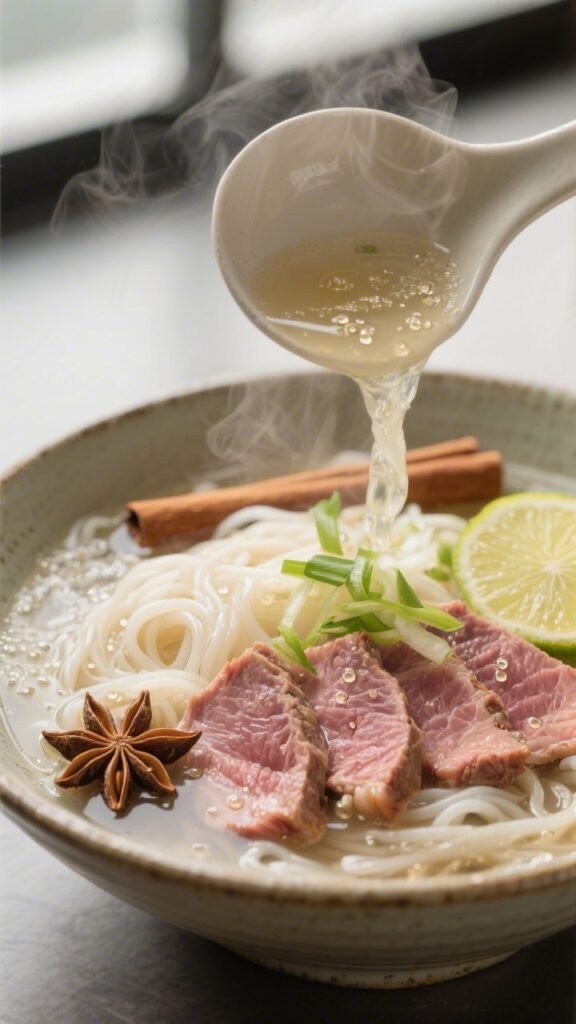
Traditional pho broth is built on toasted spices, charred aromatics, and long-simmered bones. This Gluten-Free Vietnamese Pho Recipe honors that base while staying accessible.
You’ll get a clean, clear broth with layers of star anise, cinnamon, and clove—balanced with fish sauce, a touch of sweetness, and bright lime at the end.
It’s also friendly for gluten-free eaters without shortcuts that taste like compromises. We use 100% rice noodles, verified gluten-free fish sauce, and tamari instead of soy sauce if needed. The result tastes authentic, fresh, and restaurant-level, but you can make it on the stove in a few hours or in the Instant Pot to save time.
Shopping List
- Beef bones (marrow and knuckle) or a mix of beef shank and oxtail; 3–4 pounds
- Beef cuts for serving: thinly sliced sirloin, brisket, or cooked shredded chicken for a different protein
- Onions (2 large), halved
- Fresh ginger (4–5 inches), sliced lengthwise
- Whole spices: star anise (6), cinnamon sticks (2), whole cloves (6), coriander seeds (2 tablespoons), black peppercorns (1 tablespoon), cardamom pods (optional, 2)
- Fish sauce (gluten-free; check the label), 3–4 tablespoons
- Rock sugar or brown sugar, 1–2 tablespoons
- Sea salt
- Rice noodles (banh pho, small to medium width), 12–16 ounces; verify gluten-free
- Herbs and toppings: fresh Thai basil, cilantro, scallions, mint (optional), bean sprouts, lime wedges, thinly sliced onion
- Chiles: Thai bird or jalapeño, thinly sliced
- Gluten-free soy alternative (tamari or coconut aminos), optional
- Gluten-free hoisin and sriracha (optional; check labels)
How to Make It
Gluten-Free Vietnamese Pho Recipe:
- Parboil the bones: Place bones and beef shank (if using) in a large pot. Cover with cold water. Bring to a rapid boil for 5–7 minutes.
Drain and rinse bones and pot to remove impurities. This keeps the broth clear.
- Char aromatics: On a grill, broiler, or dry skillet, char onion halves and ginger until deeply browned and slightly blackened in spots, 5–8 minutes. This adds sweetness and smokiness.
- Toast spices: In a dry pan, toast star anise, cinnamon, cloves, coriander seeds, peppercorns, and cardamom until fragrant, 2–3 minutes.
Watch closely so they don’t burn.
- Simmer the broth: Return cleaned bones to the pot. Add 5–6 quarts of water, charred onion and ginger, and toasted spices (tie spices in a cheesecloth or use a spice ball for easy removal). Bring to a boil, then reduce to a gentle simmer.
Skim foam and fat in the first 30 minutes.
- Season: After 2 hours, add 3 tablespoons fish sauce, 1 tablespoon sugar, and 1 tablespoon salt. Continue simmering for a total of 3–4 hours (up to 6 for deeper flavor). Taste and adjust seasoning. The broth should be savory, slightly sweet, and aromatic.
- Strain and clarify: Remove bones and aromatics.
Strain the broth through a fine-mesh strainer. If you like a leaner broth, chill and remove the fat cap before reheating.
- Prep noodles: Soak rice noodles in warm water 20–30 minutes until pliable. Cook briefly in boiling water 30–60 seconds until just tender.
Rinse with cold water to stop cooking and prevent clumping.
- Prepare toppings: Arrange basil, cilantro, mint, bean sprouts, lime wedges, onion slices, and chiles on a platter. This makes the bowl interactive and fresh.
- Slice the meat: Freeze sirloin for 15–20 minutes to firm, then slice paper-thin across the grain. For brisket or shank, slice cooked meat thinly.
Keep cold until serving.
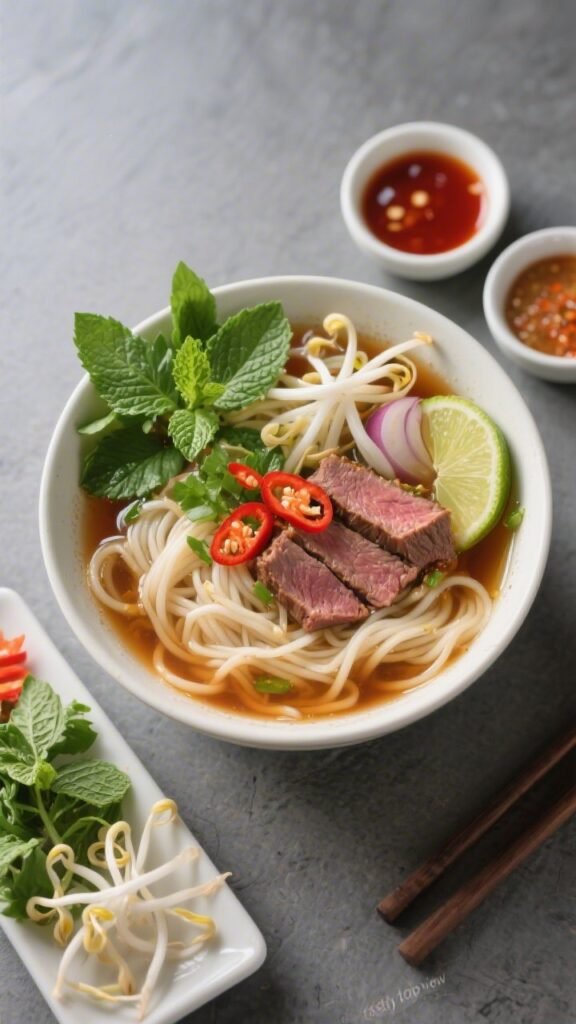
- Assemble bowls: Divide noodles among bowls. Top with raw sirloin slices and/or cooked brisket. Bring broth to a rolling boil and ladle over the meat to cook it just until blush.
Finish with scallions and a squeeze of lime. Serve with gluten-free hoisin, sriracha, and tamari on the side.
How to Store
- Broth: Cool completely, then refrigerate up to 5 days or freeze up to 3 months. Store in portions for quick meals.
- Noodles: Keep cooked noodles separate.
Toss lightly with oil, refrigerate up to 3 days. Refresh in hot water for 15–30 seconds before serving.
- Meat and herbs: Store sliced meat covered in the fridge up to 2 days. Herbs and sprouts keep best washed, dried, and wrapped in paper towels inside a container.
Benefits of This Recipe
- Gluten-free without compromise: Rice noodles and careful sauce choices keep it safe and authentic.
- Light yet satisfying: Clear broth and lean proteins make a filling meal that doesn’t feel heavy.
- Customizable at the table: Everyone can adjust herbs, heat, and sauce to taste.
- Meal-prep friendly: Make a big pot of broth once and assemble quick bowls all week.
- Nutritious: Long-simmered bones add collagen and minerals; fresh herbs bring antioxidants and brightness.
Common Mistakes to Avoid
- Skipping the parboil: This step removes impurities.
Without it, your broth can turn cloudy and gamey.
- Boiling too hard: A rolling boil emulsifies fat and muddies the broth. Keep it at a gentle simmer.
- Forgetting to char and toast: Charred aromatics and toasted spices build the signature pho flavor.
- Overcooking rice noodles: They go from perfect to mushy fast. Cook briefly and rinse.
- Using sauces with hidden gluten: Some fish sauces, hoisin, and soy sauces contain wheat.
Always check labels and choose gluten-free versions.
Variations You Can Try
- Pho Ga (Chicken): Use a whole chicken and chicken backs. Simmer 1.5–2 hours. Shred the meat and return to bowls.
- Instant Pot Shortcut: Pressure cook parboiled bones, aromatics, and spices with 10–12 cups water for 45–60 minutes, natural release 20 minutes.
Strain and season.
- Vegetarian Pho: Use charred onion, ginger, mushrooms, kombu (remove after 30 minutes), and vegetable scraps. Season with gluten-free tamari and a touch of sugar.
- Spicy Pho: Add sliced fresh chiles, a spoon of gluten-free chili paste, or simmer dried chiles with the broth.
- Lean and Green: Add blanched bok choy, broccoli, or snap peas to boost veggies without weighing the bowl down.
FAQ
Is traditional pho gluten-free?
Mostly, yes. Rice noodles are naturally gluten-free, and the broth itself doesn’t require gluten.
The main risks are sauces and seasonings like some fish sauce, hoisin, or soy sauce that may contain wheat. Choose products labeled gluten-free to be safe.
Can I make the broth ahead?
Absolutely. Pho broth actually improves overnight.
Make it on the weekend, store it in the fridge, and reheat as needed. Skim the fat once it’s cold if you want a leaner broth.
What cut of beef works best?
For broth, use a mix: marrow bones for body, knuckle for gelatin, and shank or oxtail for beefy depth. For topping, thinly sliced sirloin or eye of round cooks instantly under hot broth.
Brisket adds a tender, rich option if you prefer cooked meat.
Do I need rock sugar?
No, but it adds a clean, rounded sweetness that balances the anise and fish sauce. If you don’t have it, brown sugar or even a small piece of palm sugar works fine. Start small and adjust to taste.
How do I get clear broth?
Parboil and rinse the bones, simmer gently (don’t boil hard), skim early, and strain through a fine mesh.
Avoid stirring the pot too much during simmering. These steps keep the broth bright and clear.
Can I use store-bought broth?
You can, but it won’t taste like true pho unless you infuse it. Simmer beef or chicken broth with charred onion and ginger, plus toasted spices, for at least 45–60 minutes.
Season with gluten-free fish sauce and a touch of sugar.
What if I don’t eat fish sauce?
Use gluten-free tamari and a small piece of kombu for umami, then remove the kombu after 30 minutes. It won’t be exactly the same, but you’ll still get a deep, savory broth.
How spicy should pho be?
Traditionally, the broth isn’t spicy. Heat comes from fresh chiles and sauces added at the table.
Keep the base mild and let each person customize.
Can I freeze the noodles?
Cooked rice noodles don’t freeze well. Freeze the broth and meat instead. When ready to eat, cook fresh noodles in minutes and assemble.
How do I slice beef super thin at home?
Partially freeze the meat for 15–20 minutes to firm it up, then use a sharp knife to slice across the grain.
Aim for paper-thin slices so the hot broth cooks them instantly.
Final Thoughts
This Gluten-Free Vietnamese Pho Recipe is all about clean flavors and smart choices. With quality bones, a few pantry spices, and verified gluten-free sauces, you can make a bowl that rivals your favorite shop. Keep the broth gentle, the noodles tender, and the herbs fresh.
It’s comfort you can sip, tailored to your table and your needs.
Printable Recipe Card
Want just the essential recipe details without scrolling through the article? Get our printable recipe card with just the ingredients and instructions.