
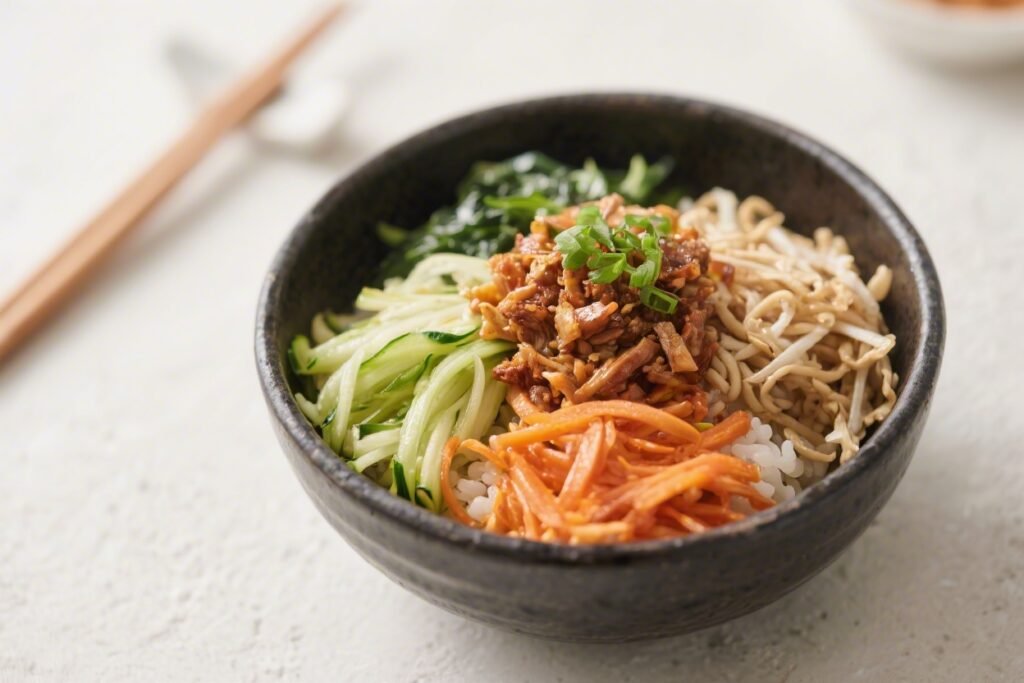
Bibimbap is one of those meals that makes you feel good the moment it hits the table. It’s colorful, customizable, and packed with flavor and crunch. This gluten-free version keeps everything you love about the classic—vibrant veggies, savory protein, and a rich, spicy sauce—without the wheat.
You’ll still get that satisfying mix of textures and the signature “mix-it-all-together” moment. Best of all, it’s weeknight-friendly and easy to scale for meal prep or a crowd.
Gluten-Free Korean Bibimbap - A Bright, Satisfying Bowl You Can Make at Home
Ingredients
- Rice: 2 cups cooked short-grain white rice (or brown rice for extra fiber)
- Protein (choose one or mix): 8 oz thinly sliced beef (sirloin or ribeye), or
- 8 oz extra-firm tofu, pressed and cubed, or
- 8 oz king oyster or shiitake mushrooms, sliced
- Vegetables: 1 medium carrot, julienned
- 1 small zucchini, julienned
- 2 cups baby spinach
- 1 cup bean sprouts (blanched or stir-fried)
- 4–5 shiitake mushrooms (if not using mushrooms as your main protein), sliced
- 1 small cucumber, thinly sliced (optional, for fresh crunch)
- 2 green onions, thinly sliced
- Kimchi, chopped (optional; ensure it’s gluten-free)
- Eggs: 2 large (one per serving), or more if you like
- Oil: Neutral oil for sautéing (avocado, grapeseed, or canola) and sesame oil for finishing
- Sesame seeds for garnish
- For the sauce (gluten-free gochujang sauce): 2 tablespoons gluten-free gochujang
- 1 tablespoon gluten-free tamari
- 1 tablespoon toasted sesame oil
- 1–2 teaspoons rice vinegar
- 1–2 teaspoons honey or maple syrup
- 1 small garlic clove, grated
- Water to thin as needed
- For marinating beef or tofu (optional but recommended): 1 tablespoon gluten-free tamari
- 1 teaspoon sesame oil
- 1 teaspoon honey or brown sugar
- 1 small garlic clove, grated
- Pinch of black pepper
Instructions
- Cook the rice. Rinse rice until the water runs mostly clear. Cook according to package directions. Keep warm.Warm rice is key to a cozy, satisfying bowl.
- Prep the sauce. In a small bowl, whisk gochujang, tamari, sesame oil, rice vinegar, sweetener, and garlic. Add a splash of water to reach a drizzleable consistency. Taste and adjust: more vinegar for brightness, more sweetener to balance heat.
- Marinate your protein (if using). Toss beef or tofu with tamari, sesame oil, honey, garlic, and pepper.Let sit 10–15 minutes while you cook the vegetables.
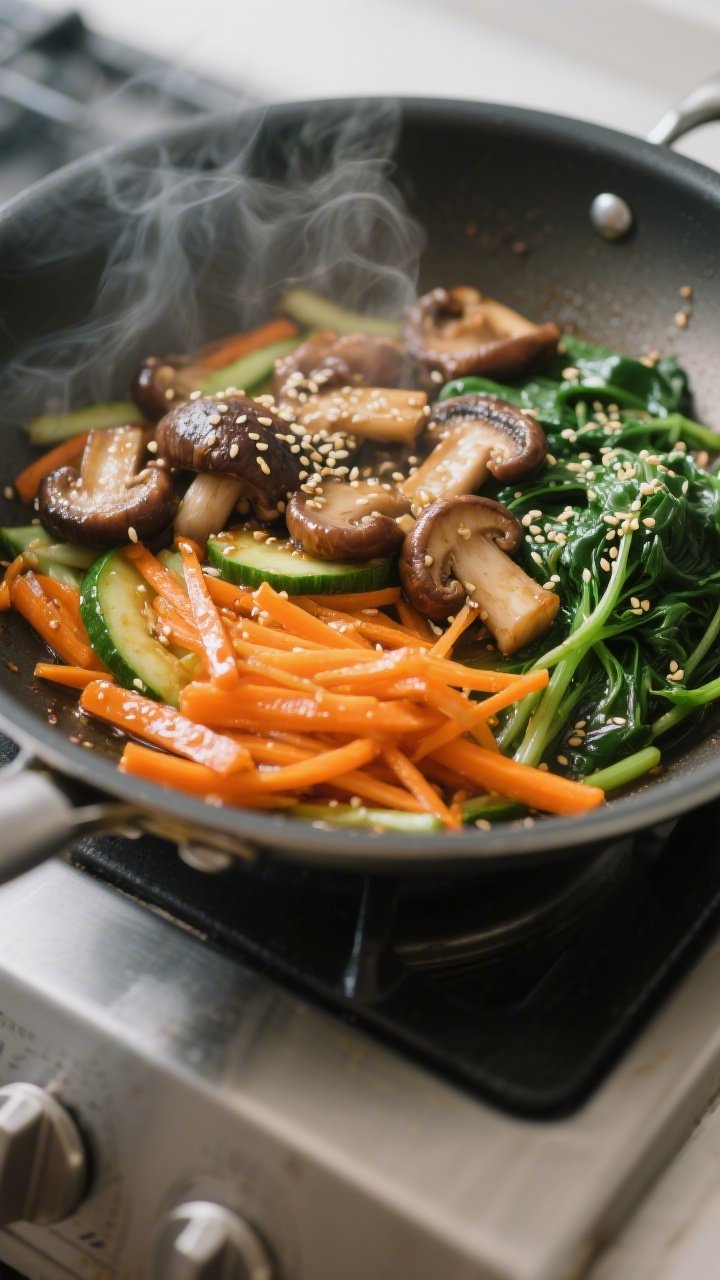
- Sauté the mushrooms. Heat a little neutral oil in a large skillet over medium-high. Add mushrooms with a pinch of salt. Cook until browned and tender, 4–6 minutes.Finish with a few drops of sesame oil. Set aside.
- Cook the carrots and zucchini. In the same pan, add a touch more oil. Sauté carrots with a pinch of salt until crisp-tender, about 2 minutes.Remove. Repeat with zucchini, 2–3 minutes. Keep both slightly snappy for good texture.
- Wilt the spinach. Add spinach to the hot pan with a drizzle of oil and a pinch of salt.Toss until just wilted, 30–60 seconds. Set aside.
- Bean sprouts. Quickly sauté or blanch the sprouts for 1 minute, then season with a tiny bit of sesame oil and salt. Keep them crunchy.
- Cook the protein. For beef: Sear in a hot pan 1–2 minutes per side until just cooked and caramelized.For tofu: Pan-fry until golden on all sides, 6–8 minutes total. For mushrooms-as-protein: Sear an extra batch to make it hearty.
- Fry the eggs. Heat a little oil in a nonstick pan. Fry eggs sunny-side up until the whites set and the yolk stays runny.A jammy yolk acts like rich sauce when mixed in.
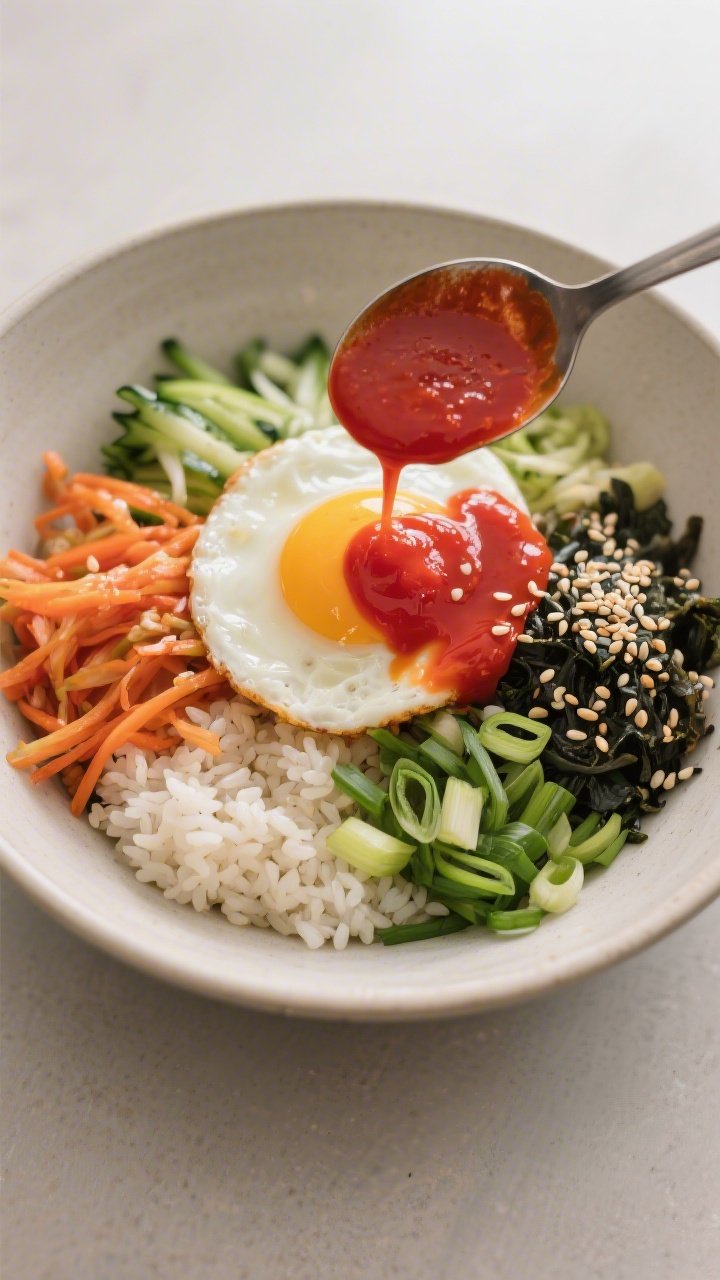
- Assemble. Add warm rice to bowls. Neatly arrange carrots, zucchini, spinach, sprouts, mushrooms, cucumber, and kimchi around the edges. Place your protein in the center and top with an egg.Spoon on the gochujang sauce. Finish with sesame seeds and sliced green onions.
- Mix and enjoy. At the table, stir everything together so the sauce and yolk coat the rice and veggies. Add more sauce if you like extra heat.
What Makes This Recipe So Good
- Totally gluten-free: We swap out regular soy sauce for gluten-free tamari and use certified gluten-free gochujang, so you can enjoy the real flavors safely.
- Great texture and flavor: Crisp-tender veggies, a jammy-yolk egg, warm rice, and a punchy sauce make every bite interesting.
- Flexible and forgiving: Use beef, tofu, chicken, or mushrooms. Add whatever crunchy vegetables you have on hand.
- Meal-prep friendly: Cook the rice, sauté the veggies, and mix the sauce in advance.
Assemble in minutes.
- Nutritious and filling: High in fiber, protein, and micronutrients while staying light and fresh.
Shopping List
- Rice: 2 cups cooked short-grain white rice (or brown rice for extra fiber)
- Protein (choose one or mix):
- 8 oz thinly sliced beef (sirloin or ribeye), or
- 8 oz extra-firm tofu, pressed and cubed, or
- 8 oz king oyster or shiitake mushrooms, sliced
- Vegetables:
- 1 medium carrot, julienned
- 1 small zucchini, julienned
- 2 cups baby spinach
- 1 cup bean sprouts (blanched or stir-fried)
- 4–5 shiitake mushrooms (if not using mushrooms as your main protein), sliced
- 1 small cucumber, thinly sliced (optional, for fresh crunch)
- 2 green onions, thinly sliced
- Kimchi, chopped (optional; ensure it’s gluten-free)
- Eggs: 2 large (one per serving), or more if you like
- Oil: Neutral oil for sautéing (avocado, grapeseed, or canola) and sesame oil for finishing
- Sesame seeds for garnish
- For the sauce (gluten-free gochujang sauce):
- 2 tablespoons gluten-free gochujang
- 1 tablespoon gluten-free tamari
- 1 tablespoon toasted sesame oil
- 1–2 teaspoons rice vinegar
- 1–2 teaspoons honey or maple syrup
- 1 small garlic clove, grated
- Water to thin as needed
- For marinating beef or tofu (optional but recommended):
- 1 tablespoon gluten-free tamari
- 1 teaspoon sesame oil
- 1 teaspoon honey or brown sugar
- 1 small garlic clove, grated
- Pinch of black pepper
Step-by-Step Instructions
- Cook the rice. Rinse rice until the water runs mostly clear. Cook according to package directions. Keep warm.
Warm rice is key to a cozy, satisfying bowl.
- Prep the sauce. In a small bowl, whisk gochujang, tamari, sesame oil, rice vinegar, sweetener, and garlic. Add a splash of water to reach a drizzleable consistency. Taste and adjust: more vinegar for brightness, more sweetener to balance heat.
- Marinate your protein (if using). Toss beef or tofu with tamari, sesame oil, honey, garlic, and pepper.
Let sit 10–15 minutes while you cook the vegetables.
- Sauté the mushrooms. Heat a little neutral oil in a large skillet over medium-high. Add mushrooms with a pinch of salt. Cook until browned and tender, 4–6 minutes.
Finish with a few drops of sesame oil. Set aside.
- Cook the carrots and zucchini. In the same pan, add a touch more oil. Sauté carrots with a pinch of salt until crisp-tender, about 2 minutes.
Remove. Repeat with zucchini, 2–3 minutes. Keep both slightly snappy for good texture.
- Wilt the spinach. Add spinach to the hot pan with a drizzle of oil and a pinch of salt.
Toss until just wilted, 30–60 seconds. Set aside.
- Bean sprouts. Quickly sauté or blanch the sprouts for 1 minute, then season with a tiny bit of sesame oil and salt. Keep them crunchy.
- Cook the protein. For beef: Sear in a hot pan 1–2 minutes per side until just cooked and caramelized.
For tofu: Pan-fry until golden on all sides, 6–8 minutes total. For mushrooms-as-protein: Sear an extra batch to make it hearty.
- Fry the eggs. Heat a little oil in a nonstick pan. Fry eggs sunny-side up until the whites set and the yolk stays runny.
A jammy yolk acts like rich sauce when mixed in.
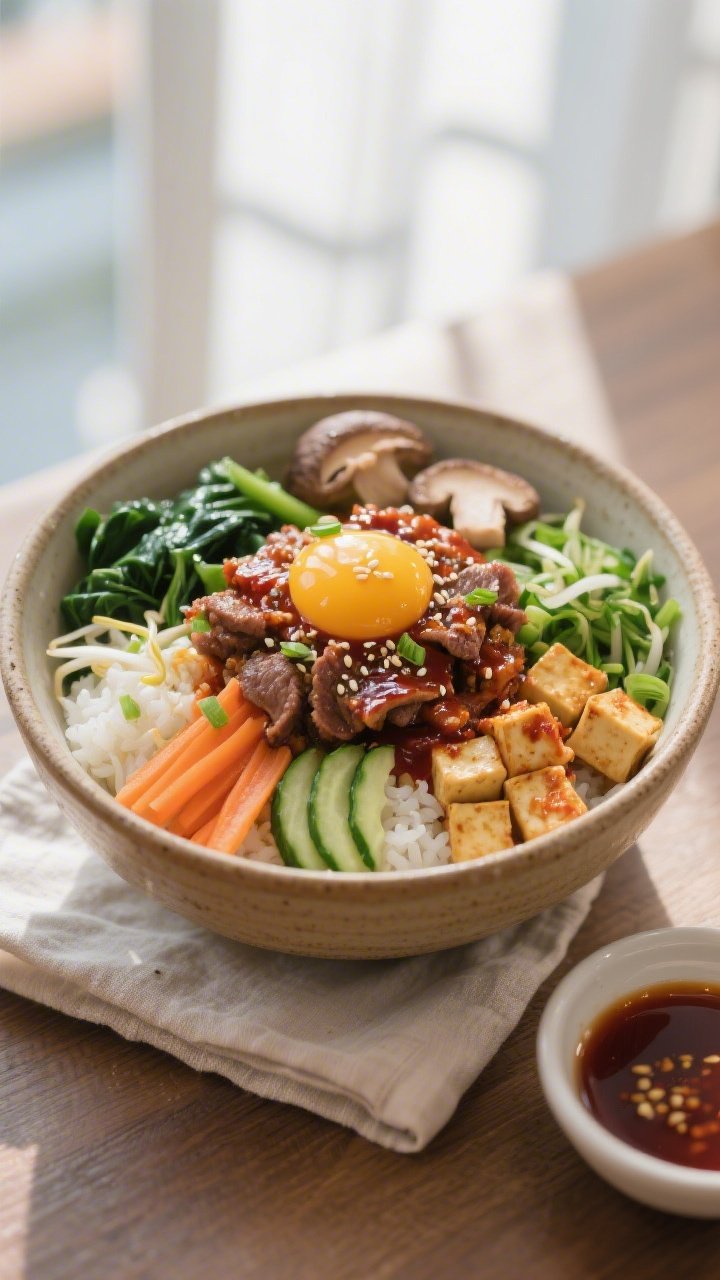
- Assemble. Add warm rice to bowls. Neatly arrange carrots, zucchini, spinach, sprouts, mushrooms, cucumber, and kimchi around the edges. Place your protein in the center and top with an egg.
Spoon on the gochujang sauce. Finish with sesame seeds and sliced green onions.
- Mix and enjoy. At the table, stir everything together so the sauce and yolk coat the rice and veggies. Add more sauce if you like extra heat.
How to Store
- Refrigerate components separately for up to 4 days: rice, cooked veggies, protein, and sauce in separate containers.
This keeps textures fresh.
- Reheat gently: Warm rice and proteins in the microwave or a skillet with a splash of water. Keep veggies just warm to preserve crunch.
- Add the egg fresh when serving. Cook a new egg for best texture and food safety.
- Meal-prep tip: Pack bowls with rice at the bottom, then veggies and protein.
Keep sauce and egg separate until serving.
Health Benefits
- Balanced macronutrients: You get quality carbs from rice, protein from eggs and meat or tofu, and healthy fats from sesame oil.
- Fiber-rich: Vegetables and optional brown rice support digestion and steady energy.
- Micronutrient-dense: Spinach offers iron and folate, carrots bring beta-carotene, mushrooms add B vitamins, and sprouts provide vitamin C and antioxidants.
- Customizable for dietary needs: Make it vegetarian or dairy-free easily, and the gluten-free swaps keep it accessible for those with celiac disease or gluten sensitivity.
Pitfalls to Watch Out For
- Hidden gluten: Regular soy sauce, some gochujang brands, and certain kimchis can contain wheat or barley. Always check labels for certified gluten-free.
- Mushy texture: Overcooking vegetables or letting rice sit too long can dull the dish. Keep veggies crisp-tender and use freshly cooked or properly reheated rice.
- Underseasoning: Each component needs a pinch of salt.
Light seasoning during cooking means the final mix will taste balanced, not bland.
- Too thick sauce: Gochujang can be dense. Thin with water and balance heat with a touch of sweet and acid for a smooth drizzle.
Recipe Variations
- Brown rice or quinoa: For more fiber or a different texture, use brown rice or a mix of brown rice and quinoa. Make sure quinoa is well-rinsed.
- Spicy-sweet chicken: Pan-sear thinly sliced chicken thighs with tamari, a little honey, and chili flakes.
Great for those who prefer poultry.
- Tofu and mushroom duet: Combine crispy tofu with seared mushrooms for a plant-forward, umami-rich bowl.
- No-egg version: Swap the egg for a drizzle of tahini or a spoon of avocado to add creaminess without yolk.
- Extra greens: Add bok choy or kale, quickly sautéed with garlic. A squeeze of lemon can brighten heavier greens.
- Crunch factor: Top with roasted seaweed strips or toasted nori flakes. They add ocean-y depth and texture.
FAQ
Is gochujang gluten-free?
Many traditional gochujang pastes contain wheat or barley.
Look for jars labeled gluten-free or certified gluten-free. Several brands now offer safe versions without sacrificing flavor.
Can I make this without spicy sauce?
Yes. Use a simple sauce of tamari, sesame oil, a bit of honey, and rice vinegar.
You’ll still get savory depth without the heat of gochujang.
What protein works best?
Thinly sliced beef is classic, but tofu, chicken thighs, or mushrooms all work well. Choose what you enjoy and season it well. The key is getting some caramelization.
Do I need a stone bowl (dolsot)?
No.
A regular bowl is fine. If you have a dolsot, preheat it and brush with sesame oil to get that crispy rice bottom, but it’s optional.
How can I make it lower carb?
Use cauliflower rice or a half-and-half mix with white rice. Keep the same veggies and proteins, and season the cauliflower rice so it doesn’t taste flat.
Can I meal prep bibimbap?
Absolutely.
Prep rice, veggies, protein, and sauce ahead. Store separately and assemble right before eating. Fry a fresh egg for the best result.
What if I don’t have bean sprouts?
Use shredded cabbage or snap peas for crunch.
The goal is a mix of textures, so feel free to swap based on what you have.
Final Thoughts
Gluten-free Korean bibimbap is all about balance—warm rice, crisp veggies, savory protein, and a bold, tangy sauce. With a few smart swaps and a bit of prep, you can make a bowl that tastes restaurant-level at home. Keep the components simple, season as you go, and don’t skip the final mix.
It’s the moment that brings everything together in one satisfying, colorful bite.
Printable Recipe Card
Want just the essential recipe details without scrolling through the article? Get our printable recipe card with just the ingredients and instructions.