
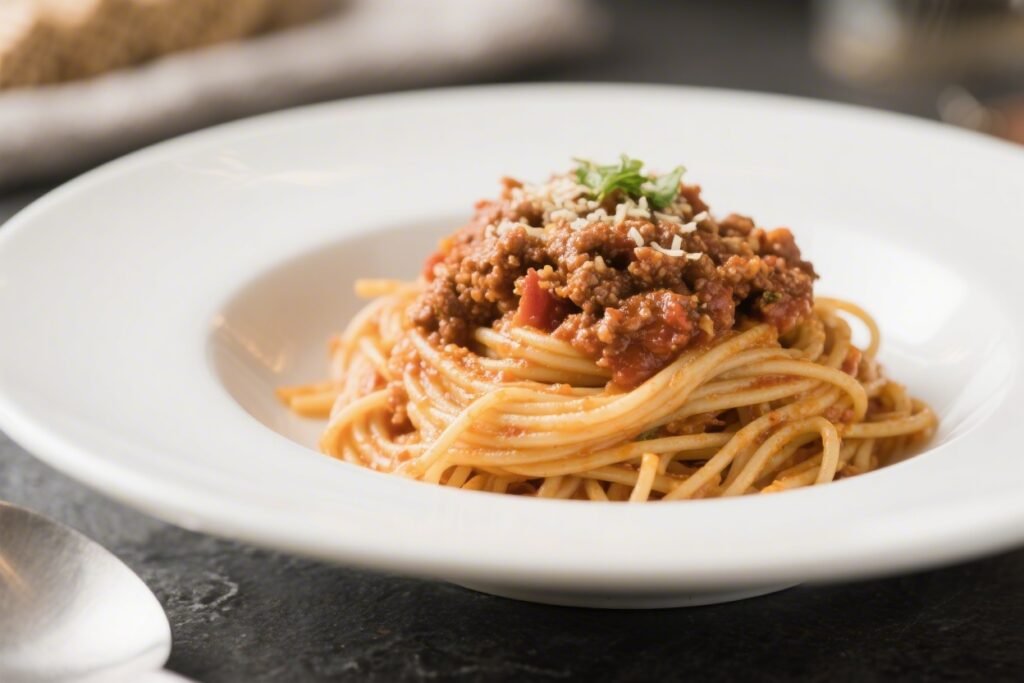
There’s something deeply satisfying about a bowl of spaghetti Bolognese. It’s cozy, rich, and full of familiar flavors. Going gluten-free doesn’t mean giving up that comfort—it just takes a few smart swaps.
This version keeps everything you love: a hearty meat sauce, tender pasta, and a glossy finish. You’ll get bold flavor, a lovely texture, and a meal that works for weeknights or guests.
Gluten-Free Spaghetti Bolognese - A Comforting Classic Made Accessible
Ingredients
- Gluten-free spaghetti (12–16 oz; choose a trusted brand made with brown rice, corn, or a blend)
- Ground beef (1 lb; 80–90% lean)
- Optional: Ground pork or Italian sausage (1/2 lb) for extra richness
- Olive oil (2–3 tbsp)
- Onion (1 medium, finely diced)
- Carrots (2 small, finely diced)
- Celery (2 ribs, finely diced)
- Garlic (3–4 cloves, minced)
- Tomato paste (2 tbsp)
- Crushed tomatoes (1 can, 28 oz)
- Beef broth or stock (1 cup; check it’s gluten-free)
- Dry red wine (1/2 cup; optional but recommended)
- Whole milk or half-and-half (1/2 cup; for silkiness)
- Bay leaves (2)
- Fresh or dried thyme (1 tsp dried or 1 tbsp fresh)
- Nutmeg (a pinch; optional but classic)
- Salt and black pepper
- Parmesan cheese (for serving; check it’s gluten-free)
- Fresh basil or parsley (for garnish)
Instructions
- Prep your base. Dice the onion, carrots, and celery as finely as you can.Small pieces melt into the sauce and create a smoother texture.
- Soften the aromatics. Heat olive oil in a large pot over medium heat. Add onion, carrot, and celery with a pinch of salt. Cook 8–10 minutes, stirring, until soft and lightly golden.Add garlic and cook 30 seconds.
- Brown the meat. Push the veggies to the edges. Add ground beef (and pork if using) to the center. Season with salt and pepper.Cook until well browned, breaking it up, about 8–10 minutes. Don’t rush this step—browning builds flavor.
- Tomato paste time. Stir in tomato paste and cook 1–2 minutes until it darkens slightly and smells sweet. This caramelization deepens the sauce.
- Deglaze with wine. Pour in red wine and scrape up any browned bits.Simmer 2–3 minutes to let the alcohol cook off. If skipping wine, use a splash of broth with 1 tsp balsamic vinegar.
- Build the sauce. Add crushed tomatoes, beef broth, bay leaves, thyme, and a pinch of nutmeg. Bring to a gentle simmer.
- Low and slow. Reduce heat to low.Partially cover and simmer 45–60 minutes, stirring now and then. Add a splash of water or broth if it gets too thick. You’re aiming for a glossy, rich sauce that’s not watery.
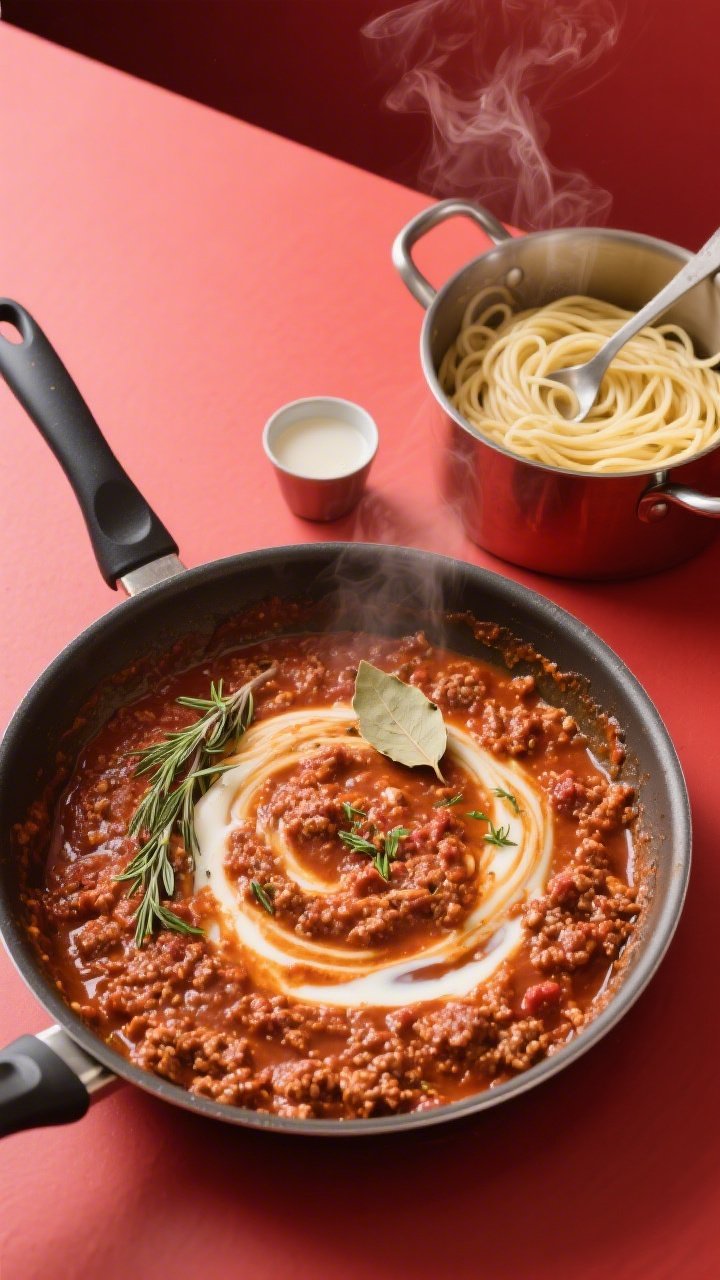
- Finish with dairy. Stir in the milk or half-and-half.Simmer 5 more minutes. Taste and adjust salt and pepper. Remove bay leaves.
- Cook the pasta. Bring a large pot of well-salted water to a boil.Add gluten-free spaghetti and cook just to al dente. Follow the package timing closely. Reserve 1 cup of pasta water, then drain.
- Marry the sauce and pasta. Add drained pasta to the sauce with a splash of pasta water. Toss over low heat 1–2 minutes until the sauce clings.Add more water as needed to get a silky coating.
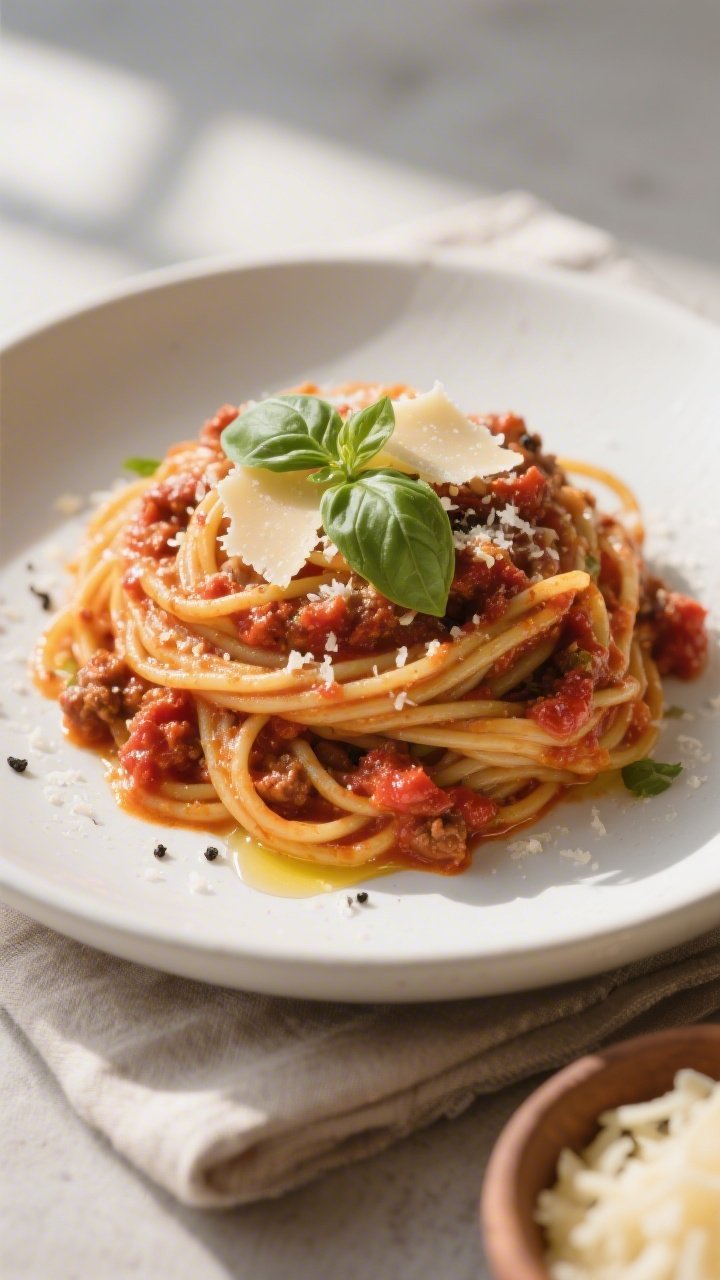
- Serve. Top with grated Parmesan and fresh basil or parsley. Finish with a drizzle of olive oil and black pepper.
What Makes This Special
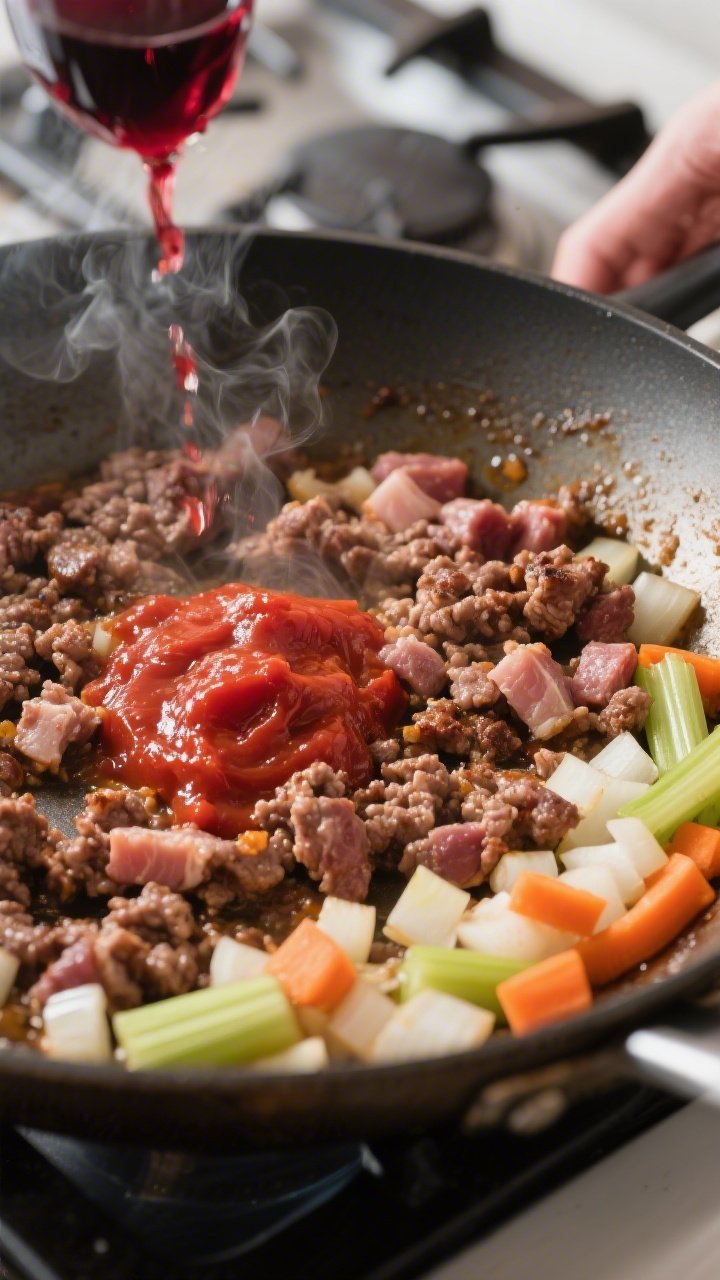
This gluten-free Bolognese leans on classic technique with modern tweaks. We build flavor with a slow-cooked sauce, a splash of wine, and plenty of aromatics.
The result is a sauce that hugs the pasta, not one that sits on top. Using quality gluten-free spaghetti means you still get that satisfying bite. Plus, the recipe is adaptable: dairy-free options, veggie boosts, and make-ahead friendly.
Shopping List
- Gluten-free spaghetti (12–16 oz; choose a trusted brand made with brown rice, corn, or a blend)
- Ground beef (1 lb; 80–90% lean)
- Optional: Ground pork or Italian sausage (1/2 lb) for extra richness
- Olive oil (2–3 tbsp)
- Onion (1 medium, finely diced)
- Carrots (2 small, finely diced)
- Celery (2 ribs, finely diced)
- Garlic (3–4 cloves, minced)
- Tomato paste (2 tbsp)
- Crushed tomatoes (1 can, 28 oz)
- Beef broth or stock (1 cup; check it’s gluten-free)
- Dry red wine (1/2 cup; optional but recommended)
- Whole milk or half-and-half (1/2 cup; for silkiness)
- Bay leaves (2)
- Fresh or dried thyme (1 tsp dried or 1 tbsp fresh)
- Nutmeg (a pinch; optional but classic)
- Salt and black pepper
- Parmesan cheese (for serving; check it’s gluten-free)
- Fresh basil or parsley (for garnish)
How to Make It
- Prep your base. Dice the onion, carrots, and celery as finely as you can.
Small pieces melt into the sauce and create a smoother texture.
- Soften the aromatics. Heat olive oil in a large pot over medium heat. Add onion, carrot, and celery with a pinch of salt. Cook 8–10 minutes, stirring, until soft and lightly golden.
Add garlic and cook 30 seconds.
- Brown the meat. Push the veggies to the edges. Add ground beef (and pork if using) to the center. Season with salt and pepper.
Cook until well browned, breaking it up, about 8–10 minutes. Don’t rush this step—browning builds flavor.
- Tomato paste time. Stir in tomato paste and cook 1–2 minutes until it darkens slightly and smells sweet. This caramelization deepens the sauce.
- Deglaze with wine. Pour in red wine and scrape up any browned bits.
Simmer 2–3 minutes to let the alcohol cook off. If skipping wine, use a splash of broth with 1 tsp balsamic vinegar.
- Build the sauce. Add crushed tomatoes, beef broth, bay leaves, thyme, and a pinch of nutmeg. Bring to a gentle simmer.
- Low and slow. Reduce heat to low.
Partially cover and simmer 45–60 minutes, stirring now and then. Add a splash of water or broth if it gets too thick. You’re aiming for a glossy, rich sauce that’s not watery.
- Finish with dairy. Stir in the milk or half-and-half.
Simmer 5 more minutes. Taste and adjust salt and pepper. Remove bay leaves.
- Cook the pasta. Bring a large pot of well-salted water to a boil.
Add gluten-free spaghetti and cook just to al dente. Follow the package timing closely. Reserve 1 cup of pasta water, then drain.
- Marry the sauce and pasta. Add drained pasta to the sauce with a splash of pasta water. Toss over low heat 1–2 minutes until the sauce clings.
Add more water as needed to get a silky coating.
- Serve. Top with grated Parmesan and fresh basil or parsley. Finish with a drizzle of olive oil and black pepper.
How to Store
- Refrigerator: Store sauce and pasta separately in airtight containers for up to 4 days. Toss cooked pasta with a little olive oil to prevent sticking.
- Freezer: Freeze the sauce (not the pasta) for up to 3 months.
Thaw overnight in the fridge, then reheat gently with a splash of water or broth.
- Reheat: Warm sauce in a saucepan over low heat. Cook fresh gluten-free spaghetti when ready to serve, then combine. This keeps the texture best.
Health Benefits
- Gluten-free accessibility: Safe for those with celiac disease or gluten sensitivity when using verified gluten-free pasta and broth.
- Protein-rich: Ground meat provides protein for satiety and muscle support.
- Vegetable boost: Onion, carrot, and celery add fiber, vitamins A and C, and minerals without overpowering the sauce.
- Portion control friendly: A rich sauce helps smaller portions feel satisfying.
Pair with a side salad for balance.
- Customizable fats: Use leaner meat or drain excess fat to manage calories, or add olive oil for heart-healthy monounsaturated fats.
What Not to Do
- Don’t skip label checks. Broths, sausages, and even grated cheeses can contain hidden gluten. Look for certified gluten-free.
- Don’t overcook gluten-free pasta. It can turn gummy fast. Start tasting 2 minutes before the package’s suggested time.
- Don’t boil the sauce hard. A fierce boil can make it harsh and reduce it too quickly.
Gentle simmering builds depth.
- Don’t forget to brown the meat. Pale meat equals flat flavor. Let it sit and sear before breaking it up.
- Don’t add dairy too early. Milk can curdle with high heat or acid. Stir it in at the end.
Variations You Can Try
- Dairy-free: Swap milk for unsweetened oat or almond milk, or skip it and add 1–2 tbsp olive oil for richness.
Use a dairy-free Parmesan-style topping.
- Classic ragù twist: Use a 50/50 mix of beef and pork, and add a small splash of cream at the end for a silkier finish.
- Veg-forward: Add finely chopped mushrooms for umami, or stir in spinach or zucchini in the last 10 minutes.
- High-fiber pasta: Try a gluten-free chickpea or lentil spaghetti for extra protein and fiber. Cook carefully to avoid mushiness.
- Spicy kick: Add a pinch of red pepper flakes when cooking the aromatics or use hot Italian sausage.
- No-wine option: Use 1/2 cup extra broth plus 1 tsp balsamic vinegar for complexity without alcohol.
FAQ
Is all Parmesan gluten-free?
Most Parmesan is naturally gluten-free, but always check labels. Pre-grated varieties sometimes include anti-caking agents that can be cross-contaminated.
When in doubt, grate from a block.
What’s the best gluten-free spaghetti brand?
Look for brands with a rice-corn blend or 100% brown rice for a closer-to-wheat texture. Barilla Gluten Free, Jovial, and Ronzoni Gluten Free are popular options with reliable bite.
Can I make this sauce in a slow cooker?
Yes. Brown the meat and aromatics on the stovetop first, then transfer to a slow cooker with tomatoes, broth, and seasonings.
Cook on low for 6–8 hours. Stir in milk at the end.
How do I prevent gluten-free pasta from sticking?
Use plenty of boiling water, salt it well, and stir during the first minute of cooking. After draining, toss with a drizzle of olive oil if you’re not combining with the sauce immediately.
Can I make it vegetarian?
Absolutely.
Swap the meat for finely chopped mushrooms and lentils, use vegetable broth, and keep the same aromatics and seasonings. Simmer until thick and rich.
Why add milk to Bolognese?
Milk softens the acidity of tomatoes and gives the sauce a rounder, silkier feel. It’s a traditional touch that brings balance and body to the ragù.
What wine works best?
A dry red like Sangiovese, Chianti, or Cabernet Sauvignon adds depth without overpowering the sauce.
Use something you’d enjoy drinking, not a “cooking wine.”
How can I thicken a watery sauce?
Simmer uncovered to reduce, stir in a teaspoon of tomato paste, or add a small knob of butter at the end for gloss. Avoid cornstarch—it can dull the flavor and turn the texture pasty.
Final Thoughts
Gluten-Free Spaghetti Bolognese should taste like comfort, not compromise. With patient browning, a gentle simmer, and pasta cooked just right, you get a classic that fits your needs and pleases everyone at the table.
Keep a batch of sauce in the freezer and you’re one pot of boiling water away from a cozy, reliable dinner. It’s simple, hearty, and exactly what a weeknight calls for.
Printable Recipe Card
Want just the essential recipe details without scrolling through the article? Get our printable recipe card with just the ingredients and instructions.