
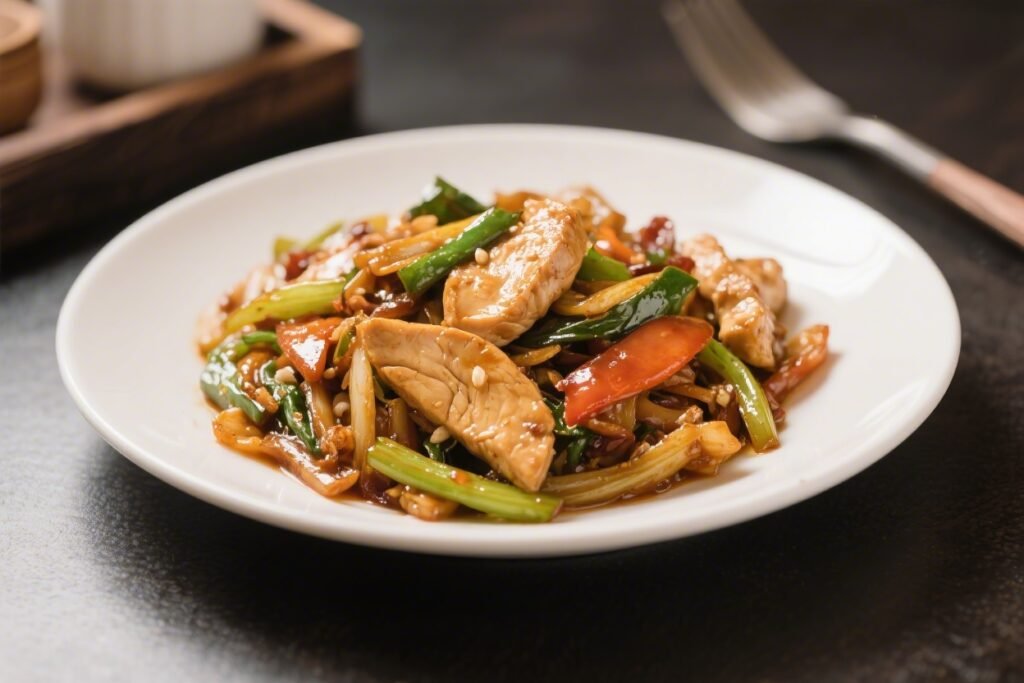
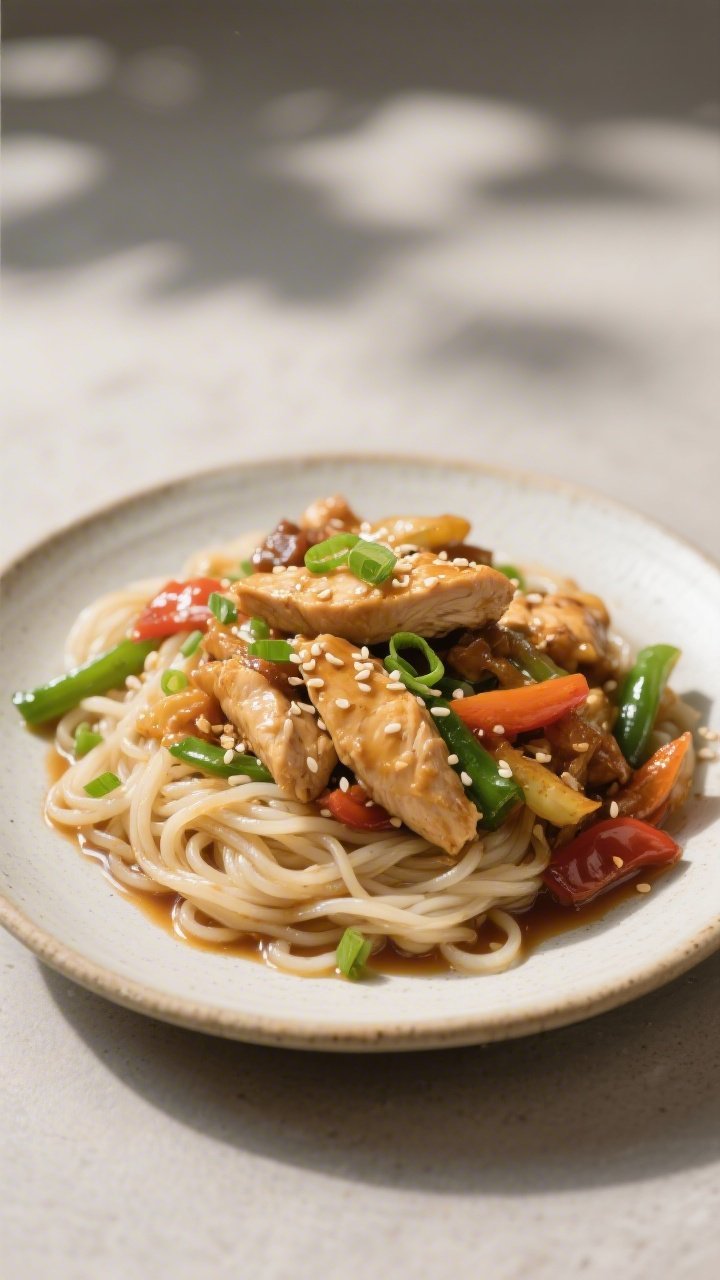
This gluten-free chicken stir fry brings crisp vegetables, tender chicken, and a glossy, savory sauce together in one pan. It’s quick enough for a weeknight and satisfying enough to keep on repeat. The sauce is simple, balanced, and easy to tweak to your taste.
If you’re avoiding gluten, this recipe keeps things safe without losing any flavor. And the best part: you can swap ingredients based on what you have in the fridge.
Gluten-Free Chicken Stir Fry - Fast, Fresh, and Flavorful
Ingredients
- 1.25 pounds boneless, skinless chicken breast, thinly sliced
- 1 red bell pepper, thinly sliced
- 1 cup broccoli florets (fresh or thawed if frozen)
- 1 cup snap peas or snow peas, trimmed
- 1 medium carrot, peeled and cut into thin matchsticks
- 4 green onions, sliced (whites and greens separated)
- 3 cloves garlic, minced
- 1 tablespoon fresh ginger, grated
- 2–3 tablespoons neutral oil (avocado, canola, or light olive oil)
- 1/2 teaspoon toasted sesame oil (optional, for finish)
- 1/3 cup gluten-free tamari or coconut aminos
- 1/3 cup low-sodium chicken broth (or water)
- 1–1.5 tablespoons honey or maple syrup, to taste
- 1 tablespoon rice vinegar (unseasoned, gluten-free)
- 1 tablespoon cornstarch (or arrowroot for grain-free)
- 1/4 teaspoon crushed red pepper flakes (optional)
- 1 tablespoon cornstarch
- 1/2 teaspoon kosher salt
- 1/4 teaspoon black pepper
- Cooked rice, cauliflower rice, or gluten-free noodles
- Sesame seeds and lime wedges
Instructions
- Prep the chicken and vegetables. Slice the chicken thinly against the grain for fast, even cooking.Cut the vegetables into bite-size pieces so they cook at a similar pace. Keep aromatics (garlic, ginger, green onion whites) in one bowl and the rest in another.
- Season and coat the chicken. Toss the chicken with 1 tablespoon cornstarch, salt, and pepper. This helps it brown and stay tender while slightly thickening the sauce later.
- Mix the sauce. In a small bowl, whisk tamari, broth, honey, rice vinegar, cornstarch, and red pepper flakes.Taste and adjust sweetness or saltiness to your preference.
- Heat the pan. Place a large skillet or wok over medium-high heat. Add 1 tablespoon oil and let it shimmer. A hot pan prevents sticking and helps with color.
- Sear the chicken in batches. Add half the chicken in a single layer.Cook 2–3 minutes per side until lightly browned and just cooked through. Transfer to a plate and repeat with remaining chicken, adding a splash more oil if needed.
- Cook the aromatics. Lower heat slightly if the pan is smoking. Add a little oil.Stir in garlic, ginger, and green onion whites. Cook 30–45 seconds, just until fragrant.
- Stir fry the vegetables. Add broccoli, carrots, and snap peas. Cook 2–3 minutes, stirring often.Add bell pepper and cook 1–2 minutes more. Vegetables should be crisp-tender with bright color.
- Return chicken and add sauce. Put the chicken and any juices back into the pan. Whisk the sauce again (cornstarch settles) and pour it in.Stir continuously 1–2 minutes until it thickens and coats everything.
- Finish and taste. Turn off heat. Stir in sesame oil and green onion tops. Taste and adjust with more tamari for salt, honey for sweetness, or vinegar for brightness.
- Serve. Spoon over hot rice, cauliflower rice, or gluten-free noodles.Garnish with sesame seeds and a squeeze of lime if you like.
Why This Recipe Works
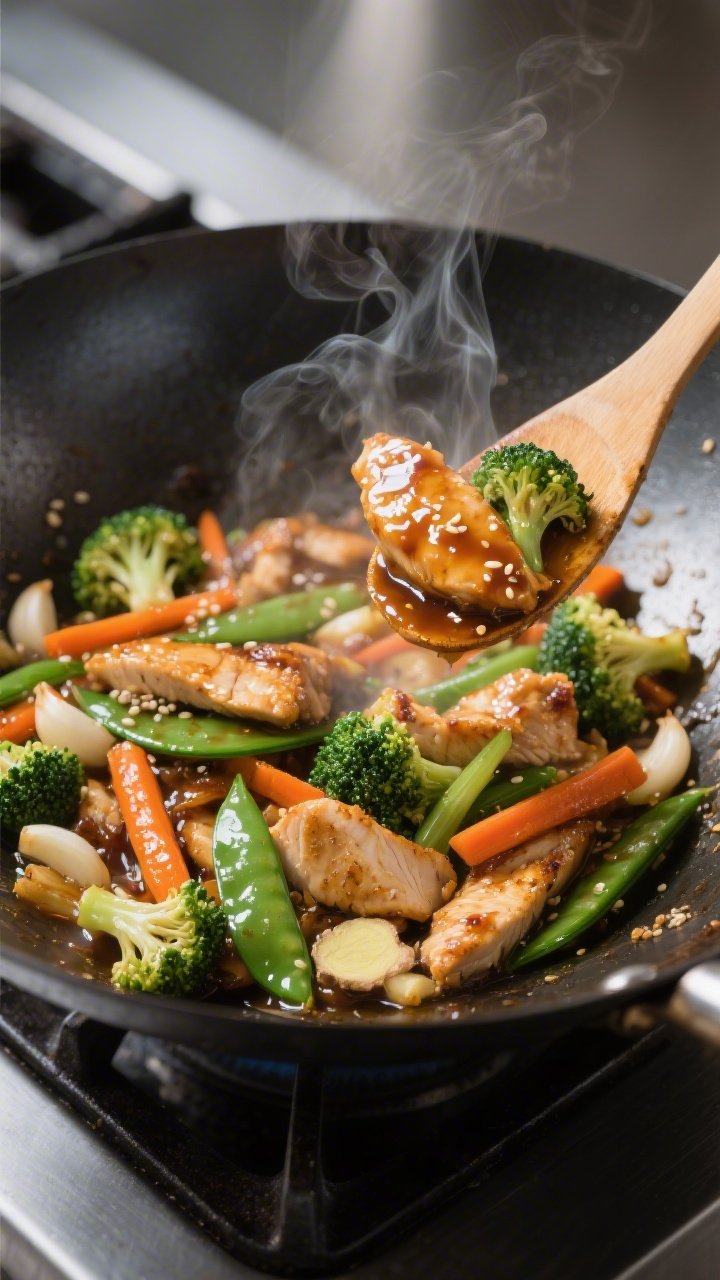
This stir fry relies on high heat and quick cooking, which keeps the vegetables crisp and the chicken juicy. The sauce hits salty, sweet, and tangy notes, so every bite tastes complete.
Using gluten-free tamari or coconut aminos replaces soy sauce without sacrificing that deep umami flavor. Cornstarch lightly coats the chicken and thickens the sauce, giving you that classic takeout-style sheen. Plus, everything cooks in one skillet or wok, making cleanup easy.
What You’ll Need
- 1.25 pounds boneless, skinless chicken breast, thinly sliced
- 1 red bell pepper, thinly sliced
- 1 cup broccoli florets (fresh or thawed if frozen)
- 1 cup snap peas or snow peas, trimmed
- 1 medium carrot, peeled and cut into thin matchsticks
- 4 green onions, sliced (whites and greens separated)
- 3 cloves garlic, minced
- 1 tablespoon fresh ginger, grated
- 2–3 tablespoons neutral oil (avocado, canola, or light olive oil)
- 1/2 teaspoon toasted sesame oil (optional, for finish)
For the gluten-free sauce:
- 1/3 cup gluten-free tamari or coconut aminos
- 1/3 cup low-sodium chicken broth (or water)
- 1–1.5 tablespoons honey or maple syrup, to taste
- 1 tablespoon rice vinegar (unseasoned, gluten-free)
- 1 tablespoon cornstarch (or arrowroot for grain-free)
- 1/4 teaspoon crushed red pepper flakes (optional)
For the chicken:
- 1 tablespoon cornstarch
- 1/2 teaspoon kosher salt
- 1/4 teaspoon black pepper
To serve (optional):
- Cooked rice, cauliflower rice, or gluten-free noodles
- Sesame seeds and lime wedges
How to Make It
- Prep the chicken and vegetables. Slice the chicken thinly against the grain for fast, even cooking.
Cut the vegetables into bite-size pieces so they cook at a similar pace. Keep aromatics (garlic, ginger, green onion whites) in one bowl and the rest in another.
- Season and coat the chicken. Toss the chicken with 1 tablespoon cornstarch, salt, and pepper. This helps it brown and stay tender while slightly thickening the sauce later.
- Mix the sauce. In a small bowl, whisk tamari, broth, honey, rice vinegar, cornstarch, and red pepper flakes.
Taste and adjust sweetness or saltiness to your preference.
- Heat the pan. Place a large skillet or wok over medium-high heat. Add 1 tablespoon oil and let it shimmer. A hot pan prevents sticking and helps with color.
- Sear the chicken in batches. Add half the chicken in a single layer.
Cook 2–3 minutes per side until lightly browned and just cooked through. Transfer to a plate and repeat with remaining chicken, adding a splash more oil if needed.
- Cook the aromatics. Lower heat slightly if the pan is smoking. Add a little oil.
Stir in garlic, ginger, and green onion whites. Cook 30–45 seconds, just until fragrant.
- Stir fry the vegetables. Add broccoli, carrots, and snap peas. Cook 2–3 minutes, stirring often.
Add bell pepper and cook 1–2 minutes more. Vegetables should be crisp-tender with bright color.
- Return chicken and add sauce. Put the chicken and any juices back into the pan. Whisk the sauce again (cornstarch settles) and pour it in.
Stir continuously 1–2 minutes until it thickens and coats everything.
- Finish and taste. Turn off heat. Stir in sesame oil and green onion tops. Taste and adjust with more tamari for salt, honey for sweetness, or vinegar for brightness.
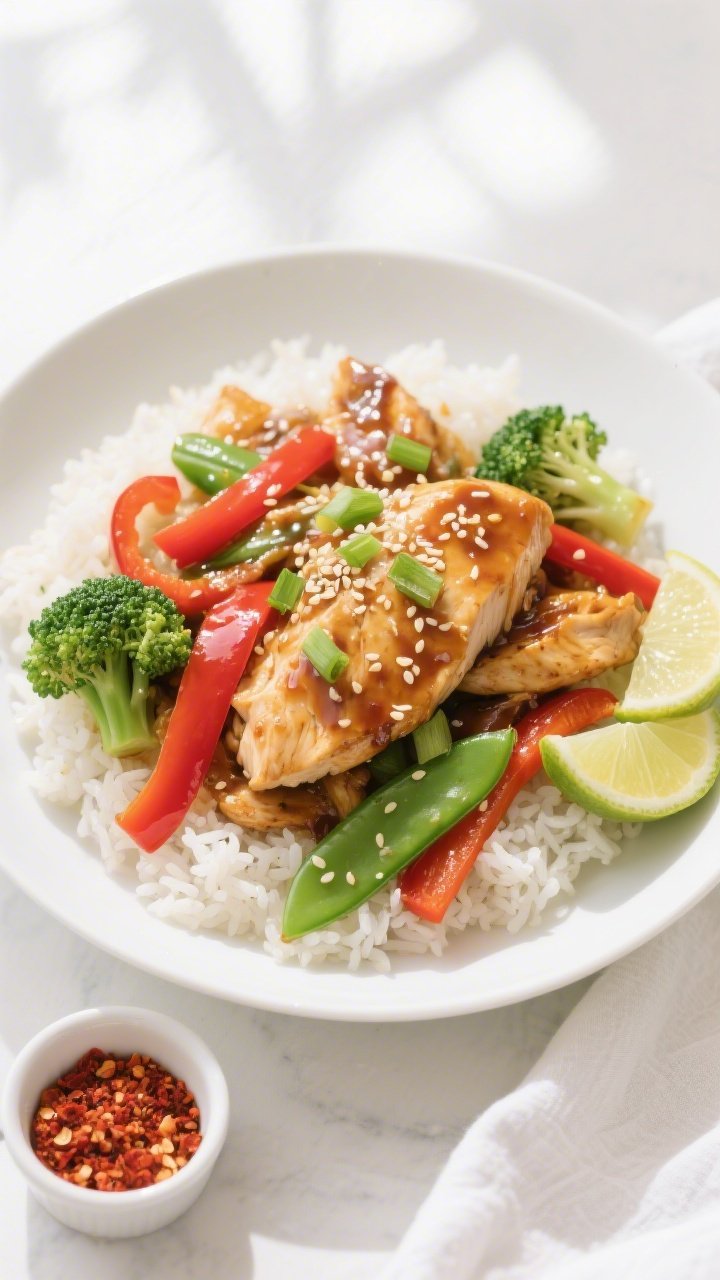
- Serve. Spoon over hot rice, cauliflower rice, or gluten-free noodles.
Garnish with sesame seeds and a squeeze of lime if you like.
Storage Instructions
- Refrigerator: Cool completely, then store in an airtight container for up to 4 days.
- Freezer: Freeze in portions for up to 2 months. Thaw overnight in the fridge for best texture.
- Reheating: Warm gently in a skillet over medium heat with a splash of water or broth to loosen the sauce. Microwave in short intervals, stirring between bursts to avoid overcooking the chicken.
- Make-ahead tips: Slice chicken and vegetables up to 24 hours ahead.
Mix the sauce and keep it separate. Stir well before cooking.
Benefits of This Recipe
- Naturally gluten-free, no fuss. With tamari or coconut aminos and cornstarch, you get classic stir fry taste without gluten.
- Fast and flexible. Most of the time is in prep; cook time is under 15 minutes. Swap veggies based on what’s in the crisper.
- Balanced nutrition. Lean protein, fiber-packed veggies, and a moderate sauce keep it satisfying without feeling heavy.
- Great for meal prep. Holds up well for lunches and reheats cleanly with a quick splash of liquid.
- Family-friendly flavor. Mild base with room to add heat for spice lovers.
What Not to Do
- Don’t overcrowd the pan. Crowding steams the chicken and vegetables.
Cook the chicken in batches for seared edges and better texture.
- Don’t skip the cornstarch whisk. Cornstarch sinks fast. Whisk the sauce right before it hits the pan to avoid lumps.
- Don’t use regular soy sauce. It contains gluten. Choose certified gluten-free tamari and check all labels, including vinegar and broth.
- Don’t overcook the vegetables. Crisp-tender is the goal.
Soft vegetables make the stir fry taste dull.
- Don’t add sesame oil too early. It’s a finishing oil. Cooking it over high heat can turn it bitter.
Alternatives
- Protein swaps: Try thin-sliced beef, shrimp, firm tofu, or tempeh. For tofu, press and cube it, then sear until golden before adding vegetables.
- Sauce tweaks: Use coconut aminos for sweeter, milder flavor and reduce honey.
Add a teaspoon of chili-garlic sauce or gluten-free sriracha for heat.
- Vegetable variations: Use mushrooms, zucchini, baby corn, bok choy, or cabbage. Frozen stir fry blends work in a pinch; cook off extra moisture first.
- Grain options: Serve with jasmine rice, brown rice, quinoa, or cauliflower rice. For noodles, choose certified gluten-free rice noodles or soba made with 100% buckwheat.
- Thickener choices: Arrowroot or tapioca starch can replace cornstarch.
Mix well and don’t boil too long, or the sauce can turn gummy.
Is this sauce safe for celiac disease?
Yes, as long as you use certified gluten-free tamari (or coconut aminos) and confirm that your rice vinegar, broth, and cornstarch are gluten-free. Always check labels, since formulations can change and cross-contact is possible.
Can I make it without cornstarch?
Use arrowroot or tapioca starch in the same amount. Whisk it into the sauce and add it at the end, letting it thicken gently.
Avoid prolonged boiling, which can make the texture stringy with these starches.
How do I keep chicken tender in a stir fry?
Slice it thinly against the grain, coat lightly with cornstarch, and cook quickly over high heat without crowding. Pull it off the heat as soon as it’s just cooked through, then finish in the sauce.
What if I don’t have a wok?
A large, heavy skillet works well. Preheat it thoroughly and cook in batches to maintain high heat and achieve good sear.
Can I use frozen vegetables?
Yes.
Thaw and pat dry for best results, or add them straight from frozen and cook off the moisture before adding the sauce. Expect slightly softer texture than fresh.
How can I make it lower in sodium?
Use low-sodium tamari and broth, and thin the sauce with a bit more water. Add acid (extra vinegar or a squeeze of lime) to brighten flavors without more salt.
Final Thoughts
This gluten-free chicken stir fry is quick, colorful, and reliable.
It’s the kind of recipe you can memorize and customize week after week. Keep tamari, cornstarch, and a bag of mixed veggies on hand, and a good dinner is always close by. Once you get the rhythm—hot pan, quick sear, crisp veggies, glossy sauce—you’ll be set for countless variations.
Printable Recipe Card
Want just the essential recipe details without scrolling through the article? Get our printable recipe card with just the ingredients and instructions.